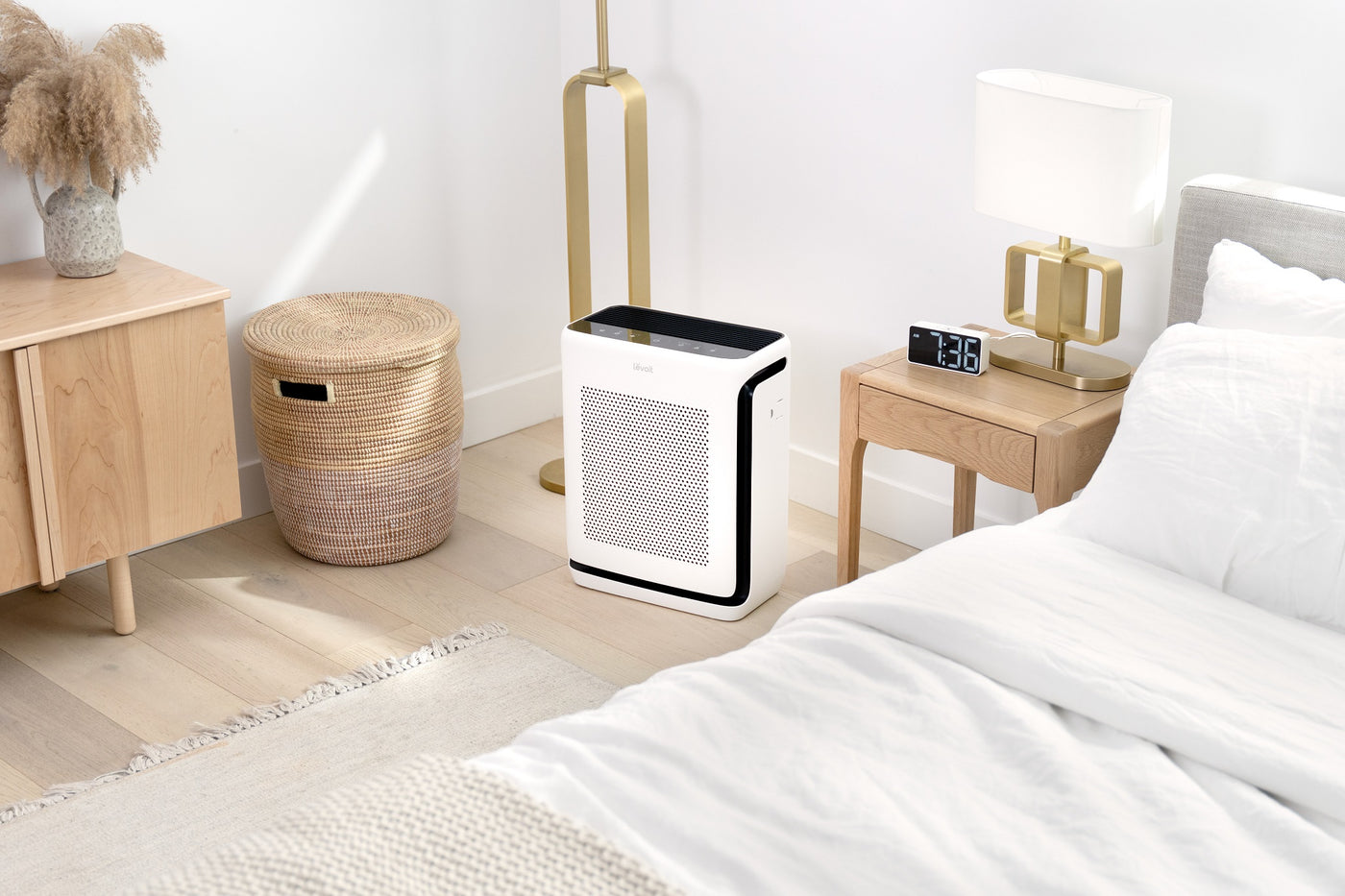
Best Air Purifier for Mold: 7 Picks for Spores and Musty Odors
The best air purifier for mold is a properly sized unit with effective particle filtration and enough clean-air delivery to cycle the room’s air several times an hour. This guide compares seven options, from affordable bedroom purifiers to high-capacity models with substantial carbon filters for musty odors.
An air purifier can capture some airborne mold spores and fragments, but it cannot remove mold growing on a wall, stop a leak, dry a damp basement, or fix the source of a musty smell. The right purifier is a useful part of an indoor-air plan, not a substitute for moisture control and proper cleanup.
- The best air purifiers for airborne mold spores
- Which features matter: filtration, CADR, room size, and carbon
- What to use in a musty basement or a home with a mold problem
- Why an air purifier alone cannot solve black mold or mildew
Quick answer: what matters most
- For airborne spores: Choose a well-sized purifier with a high-efficiency particle filter and a published CADR.
- For musty odors: Look for a substantial activated-carbon filter; a thin carbon-coated sheet may have limited odor capacity.
- For basement mold: Fix moisture and use a dehumidifier where needed. A purifier is only a supplement.
- For safety: Avoid ozone generators. If a purifier has an ionizer or plasma feature, check whether it can be disabled.



| Smoke CADR / airflow | Room size at 4.8 ACH | Particle filtration | Odor filtration | Smart controls | ||
|---|---|---|---|---|---|---|
Coway Mighty
Best overall
|
233 CFM smoke CADR | 361 sq. ft. | True HEPA | Deodorization carbon | No app | BUY NOW |

Levoit Core 300-P
Budget
|
143 CFM smoke CADR | 222 sq. ft. | HEPA-grade filter | Activated carbon | No app | BUY NOW |

Winix 5510
Larger rooms
|
253 CFM smoke CADR | 392 sq. ft. | True HEPA | AOC carbon | Wi-Fi / app | BUY NOW |

Blueair 311i Max
Quiet option
|
283 CFM smoke CADR | 439 sq. ft. | HEPASilent dual filtration | Particle & carbon filter | Wi-Fi / app | BUY NOW |

Austin Air HealthMate
Musty odors
|
400 CFM fan airflow (not CADR) | Not stated at 4.8 ACH | Medical-grade HEPA | Large carbon/zeolite blend | No app | BUY NOW |

Levoit Core 400S-P
Smart mid-size
|
231 CFM smoke CADR | 358 sq. ft. | HEPA-type / high-efficiency | Activated carbon | Wi-Fi / app | BUY NOW |

Levoit Vital 200S-P
Pet households
|
250 CFM CADR | 388 sq. ft. | HEPA-grade in Sleep Mode | Activated carbon; filter options vary | Wi-Fi / app | BUY NOW |
Best Air Purifier for Mold Reviews
1. Best Overall Air Purifier for Mold: Coway Airmega AP-1512HH Mighty
Coway Airmega AP-1512HH Mighty
A balanced medium-room purifier with a washable pre-filter, True HEPA filtration, and a deodorization filter. The ionizer can be switched off.
Best for: Medium-sized bedrooms, living rooms, and home offices where you want dependable particle filtration plus a separate odor-reduction stage.
The Coway Airmega AP-1512HH is our best overall pick because it combines a True HEPA filter with a washable pre-filter and a deodorization filter. Its published smoke CADR is 233 CFM, and Coway rates it for a 361-square-foot room at 4.8 air changes per hour. That makes it a sensible choice for a typical bedroom or medium-sized living area—not a whole-house solution.
For mold concerns, the important part is the mechanical particle filtration. A properly fitted HEPA filter can capture airborne particles that pass through the unit, including many mold spores and fragments. The deodorization filter adds some help with everyday smells, although it is not a heavy-duty carbon bed designed to remove every musty or chemical odor.
One detail worth knowing: the AP-1512HH also includes a bipolar ionizer. Coway provides a control to switch the ionizer off. If you prefer a straightforward mechanical-filtration setup, leave that feature disabled and use the pre-filter, HEPA filter, and deodorization filter. Keep the washable pre-filter clean and replace the other filters according to the manual and actual use.
The main limitation is room size. Coway’s larger coverage numbers are based on fewer air changes per hour. For a room with a persistent airborne-particle problem, use the 361-square-foot rating as the more useful comparison point rather than the much larger one-air-change figure.
- True HEPA filtration for airborne particles
- Published smoke CADR of 233 CFM
- Washable pre-filter helps catch larger dust and debris
- Separate deodorization filter for light household odors
- Ionizer can be switched off
- Best suited to medium rooms at its 4.8-ACH rating
- No app or Wi-Fi controls on the standard model
- The carbon stage is not a substitute for removing the odor source
The AP-1512HH earns the top spot for its combination of True HEPA filtration, a useful carbon deodorization stage, and a clearly stated medium-room CADR. It will not remediate mold, but it is a strong supplementary air cleaner when moisture and visible growth are being handled separately.
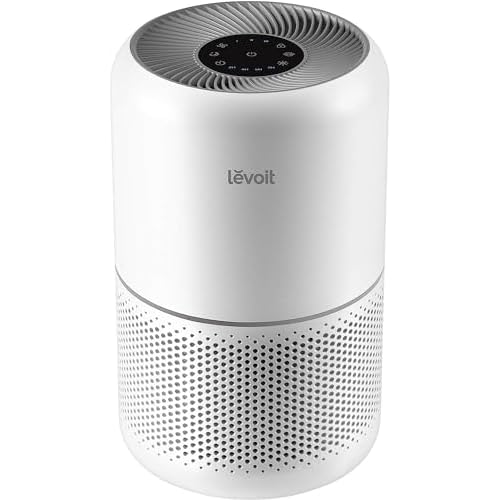
2. Best Budget Air Purifier for Mold: Levoit Core 300-P
Levoit Core 300-P
A compact, independently rated option for smaller rooms. Its filter is described as HEPA-grade under specified conditions and includes activated carbon.
Best for: Small bedrooms, dorm rooms, and compact home offices where price and simple operation matter.
The Levoit Core 300-P is the budget pick because its published smoke CADR is 143 CFM and its AHAM-verified room rating is 222 square feet at 4.8 air changes per hour. It is a much smaller-capacity option than the Winix or Blueair models above, but that is not a problem if you are using it in a smaller room.
Its three-in-one filter combines a pre-filter, a high-efficiency particle filter, and activated carbon. Levoit describes the main filter as HEPA-grade under specified testing conditions rather than simply labeling the entire unit as a conventional True HEPA purifier. For a careful buying guide, that distinction matters: compare the verified CADR and room-size rating instead of relying only on a product title that says “HEPA.”
The Core 300-P is straightforward to use, has a sleep mode, and does not depend on a phone app. Levoit also sells different replacement-filter versions, including options aimed at smoke or odor concerns. The standard carbon layer can help with light odors, but anyone trying to deal with a strong, persistent basement smell should not expect a compact purifier to replace moisture remediation or a dehumidifier.
There is one practical caveat for international buyers: the Amazon listing we checked specifies 120-volt US operation. Check the voltage label and local availability before buying outside North America. This is especially important when ordering electrical appliances from a US marketplace.
- Lower-cost entry into room air filtration
- AHAM-verified smoke CADR of 143 CFM
- Compact footprint and sleep mode
- Replacement filters are widely offered in several versions
- No app setup required
- Not suitable for large rooms at its 4.8-ACH rating
- Levoit describes the filter as HEPA-grade under specified conditions
- Standard carbon stage is limited for strong musty odors
- US listing specifies 120V; check compatibility abroad
The Core 300-P makes sense for a small room and a tighter budget. Its CADR is clearly stated, and its compact size is convenient. Choose a larger purifier if the room is bigger, and remember that its carbon layer is not a fix for a damp or moldy building.
3. Best Air Purifier for Larger Rooms: Winix 5510
Winix 5510
A larger-capacity option with True HEPA, activated-carbon deodorization, smart sensors, and app control. PlasmaWave can be disabled.
Best for: Larger bedrooms and living rooms where you want a higher smoke CADR, an app, and a dedicated carbon filter.
The Winix 5510 is the larger-room choice in this group. Winix lists an AHAM-verified room size of 392 square feet, a smoke CADR of 253 CFM, and a True HEPA filter rated at 99.99% with an approximate 12-month life. Its AOC activated-carbon deodorization filter is also listed with a 12-month life, although actual replacement timing depends on use and air conditions.
That combination is useful for a home where airborne particles and everyday odors are both concerns. The pre-filter catches larger debris, the True HEPA stage handles fine particles, and the carbon stage is intended to reduce household odors. It also has dual smart sensors, automatic fan control, and app connectivity, so it is easier to monitor and operate than a basic dial-only model.
The 5510 includes Winix PlasmaWave technology. The company describes it as an additional air-cleaning feature, but anyone who wants to avoid optional electronic air-cleaning technologies should check the manual and use the dedicated PlasmaWave control to turn it off. The purifier can still run its mechanical filtration stages without relying on PlasmaWave.
Do not confuse the 5510 with the older Winix 5500-2. They are related products, but their specifications and replacement filters are not interchangeable by assumption. Check that the listing is for model 5510 and that it includes the correct Filter Q replacement set.
- Higher 253-CFM smoke CADR than the smaller picks
- AHAM-verified room rating of 392 square feet
- True HEPA particle filter
- AOC activated-carbon deodorization filter
- App controls and automatic air-quality sensing
- PlasmaWave can be switched off
- Larger and more expensive than compact bedroom models
- Filter Q replacements must be matched to this exact model
- US 120V listing may not suit international electrical systems
The Winix 5510 is a compelling larger-room pick because its smoke CADR and True HEPA plus carbon configuration are well matched to the job. Disable PlasmaWave if you prefer to rely on the mechanical filters, and verify the exact model and filter before purchasing.
4. Best Quiet Air Purifier for Mold: Blueair Blue Pure 311i Max
Blueair Blue Pure 311i Max
A high-CADR purifier with HEPASilent mechanical and electrostatic filtration, app controls, and a particle-and-carbon filter.
Best for: Bedrooms and shared living spaces where you want strong particle delivery without running a bulky purifier.
The Blueair Blue Pure 311i Max stands out for its combination of quiet operation and high published CADR. Blueair lists a smoke CADR of 283 CFM, a dust CADR of 314 CFM, and a pollen CADR of 365 CFM. Its recommended room size is 439 square feet at 4.8 air changes per hour, with a sound range of 23 to 50 dB.
Rather than a conventional stand-alone HEPA filter, this model uses Blueair’s HEPASilent technology, which combines mechanical and electrostatic filtration. Blueair says the filter media captures 99.97% of airborne particles down to 0.1 microns. The standard Particle & Carbon filter also includes activated carbon for light household odors; the company offers other filter types for different needs.
This makes the 311i Max a useful choice for someone who wants a relatively quiet unit with a strong CADR. The trade-off is that it is not a traditional H13-only mechanical HEPA design. Buyers who specifically want a conventional HEPA filter should choose one of the other picks instead. For anyone concerned about electrostatic technology, review the manufacturer’s safety and certification information and choose the filtration approach they are comfortable with.
Blueair estimates that the filter can last up to nine months, depending on fan speed, usage, and pollution levels. Replacement filters are a recurring cost, so include them in the total ownership budget rather than comparing only the purchase price.
- Highest smoke CADR among these four models
- Room rating of 439 square feet at 4.8 ACH
- Quiet low-speed operation starting at 23 dB
- App controls and filter-life tracking
- Particle-and-carbon filter helps with light odors
- Uses HEPASilent dual filtration rather than a conventional HEPA-only design
- Replacement filters add to long-term cost
- Standard carbon filter is not intended to solve severe mold odors
The Blue Pure 311i Max combines a high smoke CADR with low-noise operation and a carbon-containing filter. Its HEPASilent approach is different from a conventional HEPA-only purifier, so it is best for shoppers who value quiet performance and are comfortable with that technology.
5. Best Air Purifier for Musty Odors: Austin Air HealthMate B400
Austin Air HealthMate B400
A heavy-duty purifier with pre-filters, medical-grade HEPA media, and a substantial activated-carbon and zeolite blend for odors and gases.
Best for: Homes where odor reduction is a major concern and the buyer is willing to pay substantially more for a large carbon-and-zeolite filter.
The Austin Air HealthMate B400 is the specialist choice in this lineup. Its four-stage filter combines large- and medium-particle pre-filters, more than 780 cubic inches of activated carbon and zeolite, and 60 square feet of medical-grade HEPA media. Austin Air specifies a 15-pound carbon-and-zeolite blend, which gives it a much more substantial odor-adsorption stage than the thin carbon-coated pre-filters found on many budget purifiers.
For mold concerns, the HEPA stage is the part intended to capture airborne particles that pass through the unit. The carbon-and-zeolite stage is relevant when a room has lingering odors or gases, but it does not identify or remove the source of a musty smell. If the smell is coming from wet drywall, carpet, insulation, or a leak, that material and moisture problem still needs to be addressed.
Austin Air lists coverage up to 1,500 square feet under its own room-size guidance and a 400-CFM fan rating. Those figures are not the same as an AHAM smoke CADR or a room rating at 4.8 air changes per hour, so do not compare them directly with the CADR figures above. The unit is also heavy at about 47 pounds and uses 120V/60Hz power, so check electrical compatibility and placement before ordering.
- Large 15-pound carbon-and-zeolite blend for odor adsorption
- Medical-grade HEPA media for airborne particles
- Steel cabinet with 360-degree intake
- Five-year parts-and-labor warranty
- Very expensive compared with conventional room purifiers
- Heavy at about 47 pounds
- No published AHAM smoke CADR or 4.8-ACH room rating
- US model is specified for 120V/60Hz
The HealthMate B400 is worth considering when you specifically want a substantial carbon-and-zeolite stage alongside HEPA filtration. It is not a mold-remediation tool, and its 1,500-square-foot coverage claim should not be treated as a 4.8-ACH room rating.
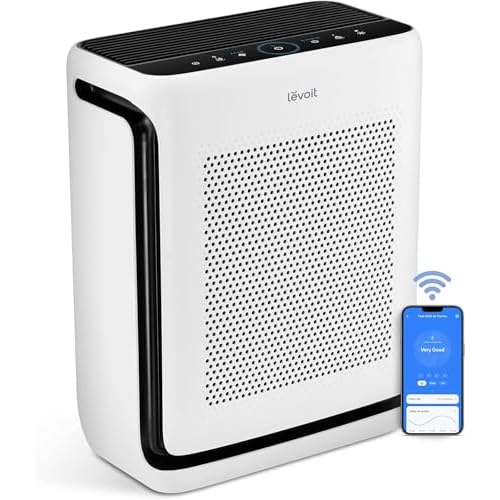
6. Best Smart Mid-Size Air Purifier: Levoit Core 400S-P
Levoit Core 400S-P
A smart, medium-room purifier with an AHAM-verified 231-CFM smoke CADR, app controls, and a three-stage filter.
Best for: Medium-sized rooms where you want a higher smoke CADR than the Core 300-P, plus app controls and an air-quality display.
The Levoit Core 400S-P is a sensible step up from the Core 300-P when the room is larger or you want more clean-air delivery. Its published smoke CADR is 231 CFM, and the AHAM-verified room rating is 358 square feet at 4.8 air changes per hour. That makes it a useful middle ground between compact bedroom purifiers and the larger high-output models in this guide.
The unit adds Wi-Fi and app controls, an air-quality indicator, automatic mode, and sleep mode. Its three-stage filter includes a pre-filter, a high-efficiency particle filter, and activated carbon. Be precise about the filter terminology: Levoit describes HEPA-grade performance under specified conditions, while independent listings may label the filter differently. We would not describe this model as a certified True HEPA unit.
The carbon stage can help with everyday odors, but it is not comparable to the large carbon bed inside the Austin Air HealthMate. Replacement filters are a recurring expense, so check the exact Core 400S-P filter version and current price before buying. The US model is 120V/60Hz.
- 231-CFM smoke CADR for stronger airflow than the Core 300-P
- AHAM-verified 358-square-foot room rating at 4.8 ACH
- App controls, air-quality display, and auto mode
- Sleep mode and relatively compact footprint
- Not a conventional certified True HEPA model
- Carbon stage is modest compared with dedicated odor-focused units
- Replacement filters add to long-term cost
- US version is specified for 120V/60Hz
The Core 400S-P offers a meaningful step up in airflow from the Core 300-P and adds convenient smart controls. It is a good medium-room option, but its high-efficiency filter should not be confused with a certified True HEPA filter.
7. Best Air Purifier for Pet Households: Levoit Vital 200S-P
Levoit Vital 200S-P
A larger-format purifier with a washable pre-filter, a U-shaped pet-hair inlet, smart controls, and a 250-CFM CADR.
Best for: Larger bedrooms and living rooms where pet hair, dander, and airborne particles are recurring concerns.
The Vital 200S-P is designed with pet households in mind, but its airflow also makes it relevant when you need a larger room purifier. Levoit lists a 250-CFM CADR and a room rating of 388 square feet at 4.8 air changes per hour. It has a washable pre-filter and an additional U-shaped air inlet intended to catch airborne pet fur before it clogs the main filter.
For mold-spore concerns, the important job is still the main particle filter and the amount of air the purifier can process. Levoit says its original filter is HEPA-grade while operating in Sleep Mode under specified test conditions; do not assume that wording means the whole unit is a certified True HEPA purifier. The model also has app controls, an infrared dust sensor, auto mode, and sleep mode.
The Vital 200S-P includes activated carbon, and Levoit offers different replacement-filter versions for different priorities. If musty odors are your main concern, compare the specific carbon filter option and its cost rather than assuming every replacement filter has the same odor capacity. The washable pre-filter is useful for pet hair, but it does not eliminate the need to replace the main filter on schedule.
- 250-CFM CADR and 388-square-foot room rating at 4.8 ACH
- Washable pre-filter helps catch larger debris and pet fur
- U-shaped inlet is designed to reduce hair buildup
- App controls, air-quality readings, auto mode, and sleep mode
- Multiple replacement-filter versions are available
- HEPA-grade wording applies under specified conditions, not a blanket True HEPA certification
- Not as odor-focused as a purifier with a large carbon bed
- The 388-square-foot rating assumes the stated 4.8-ACH conditions
- Filter version and replacement cost need checking
The Vital 200S-P combines a useful room-size rating with a washable pre-filter and pet-hair-focused intake. It is a good alternative to the Winix 5510 when those features matter, but its filter terminology and replacement-filter options deserve a close look.
What type of air purifier is best for mold?
For airborne mold spores, start with a mechanical high-efficiency particle filter and enough CADR for the room. A HEPA filter is a strong choice because it is designed to capture very small airborne particles. Mold spores vary in size, and a properly sealed purifier can capture spores and fragments that pass through its filter.
The second consideration is airflow. A purifier cannot clean the air in a room it is too small for. Use the smoke CADR as a practical way to compare particle-cleaning performance, then check the room-size rating at a stated air-change rate. For ongoing particle concerns, a room rating based on roughly four or five air changes per hour is more useful than a marketing figure based on one air change per hour.
The third consideration is activated carbon. HEPA filters capture particles; they do not remove gases and many odor compounds. A carbon filter can help with some musty smells, but the amount of carbon matters. A thin carbon-coated layer may have less odor capacity than a heavier carbon bed. If the smell comes from wet drywall, carpet, insulation, or a hidden leak, removing the source is the only lasting solution.
What to look for in a mold air purifier
Choose a properly sealed HEPA or independently verified high-efficiency particle filter. The filter must be installed correctly so air does not bypass it.
Match the purifier’s smoke CADR and room rating to the room’s floor area and ceiling height.
Carbon can reduce some gases and odors, but capacity depends on how much adsorbent material is present.
Prefer mechanical filtration and avoid devices that intentionally generate ozone. Check whether optional ionizer or plasma features can be disabled.
Check the exact replacement filter model, price, availability, and recommended replacement interval before buying.
Best air purifier for a musty basement
A musty basement needs more than an air purifier. Basements are often affected by seepage, condensation, plumbing leaks, poor drainage, or humid air. If moisture remains, mold can continue growing even while a purifier captures some of the spores floating through the room.
Start by finding and correcting the moisture source. Check for plumbing leaks, water intrusion around the foundation, condensation on cold pipes, damp carpet, and wet stored materials. Keep indoor relative humidity below 60%, ideally around 30% to 50%, when practical. A dehumidifier is often the more important appliance in a damp basement because it removes moisture from the air; an air purifier filters particles.
If the basement is dry after repairs but you still want to reduce airborne particles, choose a purifier sized for the basement’s actual usable area. For a larger open basement, the Winix 5510 or Blueair 311i Max offers more CADR than the Levoit Core 300-P. If you have separate rooms, one unit may not clean all of them effectively when doors are closed.
Do not place the purifier where stored boxes, curtains, or walls block its intake or outlet. Run it continuously at a tolerable fan speed while the room is occupied, and maintain the filter on schedule. If the smell remains strong, investigate hidden mold rather than simply buying a larger purifier.
Best air purifier for mold spores vs. musty smell
These are related but different problems. Mold spores and fragments are particles, so particle filtration and CADR are the priority. A musty smell is caused by airborne odor compounds and may require activated carbon or another gas-phase filter. A purifier that is excellent at particle removal may do little for a strong odor if its carbon stage is small.
If you mainly want to reduce airborne mold spores, prioritize a mechanical HEPA or high-efficiency filter, a well-sealed cabinet, and a room-appropriate CADR. If the odor is your main concern, compare the size and type of carbon filter as well. If both are present, choose a model that combines high particle delivery with a meaningful carbon stage—but still locate and remove the damp material causing the smell.
Is a HEPA filter enough to remove mold?
A HEPA filter can capture airborne mold spores and fragments that pass through the purifier, but it does not kill or remove mold growing on surfaces. It also cannot capture particles that never enter the unit. That is why airflow, placement, room sizing, and continuous operation matter.
A portable purifier is best understood as a way to reduce some airborne particles in a single room. It is not a mold remediation device. If there is visible growth, water damage, or a persistent musty odor, address the building problem first and use filtration as a supplement.
What about black mold?
There is no special consumer air purifier that makes a home safe from so-called black mold. The color of visible mold does not tell you which species is present or how serious the underlying moisture problem is. The same basic approach applies: stop the water source, remove moldy materials or clean affected surfaces appropriately, dry the area, and use filtration only as an additional measure.
Do not disturb a large moldy area or open walls to investigate suspected hidden growth without understanding the risk. Mold can be hidden behind drywall, wallpaper, carpet, and around plumbing. For extensive growth, recurring water damage, or mold inside HVAC systems, seek qualified remediation advice.
Air purifier vs. air scrubber for mold
An air purifier is generally intended for ongoing use in an occupied room. A professional air scrubber is a higher-capacity air-cleaning machine often used during construction or remediation work, sometimes with ducting and negative-air containment. It is not automatically a better choice for everyday home use.
If you are hiring a remediation contractor, ask what containment, filtration, and cleanup procedures they use. Do not assume that renting an air scrubber and running it beside visible mold will solve the problem. The contaminated material still needs to be addressed, and poorly controlled cleanup can spread spores and dust.
How to use an air purifier when you have mold
- Fix moisture first. Repair leaks, improve drainage, stop condensation, and dry wet materials promptly.
- Clean up the mold source. Follow appropriate cleanup guidance or hire a qualified professional for extensive or hidden growth.
- Choose the right room size. Use CADR and a room rating at a meaningful air-change rate, not the largest marketing coverage number.
- Place the purifier with clear airflow. Keep it away from curtains, furniture, and corners that block the intake or outlet.
- Run it consistently. Higher fan speeds and longer run times generally filter more air, although noise may affect the setting you can tolerate.
- Maintain the filters carefully. Replace filters on schedule. When handling a dusty used filter, avoid shaking it; follow the manufacturer’s disposal instructions and use suitable protection.
- Monitor humidity. Keep indoor relative humidity below 60%, ideally 30%–50%, to discourage future growth.
Frequently asked questions
Best air purifier for mold: FAQs
What is the best air purifier for mold?
For most medium-sized rooms, the Coway Airmega AP-1512HH is our best overall choice in this guide because it combines True HEPA filtration, a 233-CFM smoke CADR, and a deodorization filter. The best model for your home still depends on room size, filter availability, and whether odor reduction is also important.
Do air purifiers remove mold spores?
A properly sized purifier with a HEPA or high-efficiency particle filter can capture some airborne mold spores and fragments that pass through the unit. It does not remove mold growing on walls, ceilings, carpet, or inside building materials.
Can an air purifier get rid of mold in a basement?
No. It may reduce some airborne particles, but it cannot correct leaks, condensation, or damp materials. Fix the moisture source, clean or remove mold, and use a dehumidifier if humidity is high. A purifier is only a supplement.
What is the best air purifier for a musty basement smell?
Choose a purifier with both strong particle filtration and a substantial activated-carbon stage, sized for the basement. However, a persistent musty smell usually means moisture or mold remains somewhere, so investigate the source instead of relying on carbon alone.
Is a HEPA filter or activated carbon better for mold?
They do different jobs. HEPA filtration targets airborne particles such as spores; activated carbon can adsorb some gases and odors. If you need both, look for a purifier that combines a high-efficiency particle filter with a meaningful carbon stage.
Does an air purifier help with black mold?
It can capture some airborne particles, but it cannot remediate black mold or identify the species. Stop the moisture problem and arrange appropriate cleanup. For extensive or hidden growth, consult a qualified remediation professional.
Should I use an ionizer or ozone air purifier for mold?
Avoid ozone generators. Ozone can irritate the lungs and is not a reliable way to remove mold or other biological pollutants. If a purifier has an optional ionizer or plasma feature, check the manual and disable it if you prefer mechanical filtration only.
How many air changes per hour should an air purifier provide?
For comparing home purifiers, a room rating around 4 to 5 air changes per hour is a useful benchmark. Check the CADR and the room-size rating together, because a purifier may advertise a much larger area at only one air change per hour.
Can I leave an air purifier running all day?
Most portable purifiers are designed for extended operation. Running the unit longer generally filters more air, provided the airflow is unobstructed and filters are maintained. Choose a fan speed you can tolerate and follow the manufacturer’s instructions.
Will a dehumidifier work better than an air purifier for basement mold?
If the main problem is dampness or high humidity, a dehumidifier addresses moisture more directly. An air purifier filters airborne particles. In a mold-affected basement, you may need moisture control, cleanup, ventilation when outdoor conditions allow, and filtration together.
Final recommendation
For most shoppers, the Coway Airmega AP-1512HH remains the best balanced choice for a medium-sized room. Its True HEPA filter, 233-CFM smoke CADR, and separate deodorization filter make it a sensible all-rounder, provided you switch off the optional ionizer if you prefer mechanical filtration only.
Choose the Levoit Core 300-P for a smaller room and tighter budget. The Winix 5510 and Blueair 311i Max offer higher clean-air delivery; the Austin Air HealthMate B400 is the odor-focused specialist; and the Levoit Core 400S-P or Vital 200S-P are alternatives when smart controls, a larger room rating, or pet-hair handling matter more.
The most important point is that no purifier can solve the cause of mold. If you have a musty basement, recurring dampness, or visible growth, fix the moisture source and arrange proper cleanup first. Then use an appropriately sized purifier to help reduce airborne particles.
Which mold air purifier should you buy?
- Best overall: Coway Airmega AP-1512HH
- Best budget: Levoit Core 300-P
- Best for larger rooms: Winix 5510
- Best quiet option: Blueair Blue Pure 311i Max
- Best for musty odors: Austin Air HealthMate B400
- Best smart mid-size option: Levoit Core 400S-P
- Best for pet households: Levoit Vital 200S-P
The Coway Airmega AP-1512HH remains the best all-round choice for many medium rooms. The Levoit Core 300-P is the budget pick, while the Winix 5510 and Blueair 311i Max offer more airflow. Choose the Austin Air HealthMate B400 when a substantial carbon-and-zeolite filter matters most, or compare the Levoit Core 400S-P and Vital 200S-P for smart controls and larger-room use. No air purifier replaces moisture control or mold remediation.
- Measure the room and compare the CADR at the stated air-change rate.
- Check the exact replacement filter and its ongoing cost.
- Fix leaks and dampness before relying on air filtration.
Manufacturer specifications and references
Product specifications were checked against the manufacturers’ published information: Austin Air HealthMate specification sheet, Levoit Core 400S-P product specifications, and Levoit Vital 200S-P product specifications. For mold and indoor-air guidance, see the EPA mold guidance and EPA Guide to Air Cleaners in the Home.