If you want a rice cooker with a stainless steel cooking pot, finding the right one is harder than it should be.
A lot of rice cookers are advertised as “stainless steel,” but that doesn't necessarily mean the rice cooks directly against stainless steel. Sometimes the stainless steel is only on the outside of the appliance. Other models have a stainless-steel steaming basket or a stainless-steel exterior while the actual cooking pot has a nonstick coating.
That's not what we're looking for here.
For this guide, a stainless steel rice cooker means the actual cooking pot has a stainless-steel food-contact surface. I prioritized models with stainless-steel inner pots and excluded products where “stainless steel” only describes the exterior or where the cooking surface is coated.
After comparing the available options, these are the best stainless steel rice cookers to consider.
The Best Stainless Steel Rice Cookers Reviews
1. Best Overall Stainless Steel Rice Cooker — Aroma ARC-753SG

f you want a stainless steel rice cooker without spending a fortune, the Aroma ARC-753SG is the one I'd start with.
It's a deliberately simple cooker. There are no complicated menus or a long list of settings to figure out. Add your rice and water, press the switch, and let it do its thing. When the rice is finished, it automatically switches to keep warm.
The important part for this guide is the cooking pot. The ARC-753SG uses a stainless steel inner pot, rather than simply putting stainless steel on the outside of the appliance.
That makes it a particularly good fit for shoppers who are tired of seeing “stainless steel rice cooker” listings that actually have a coated cooking bowl.
The 6-cup cooked capacity is also a good middle ground. It's large enough for a small family but doesn't take up the counter space of a huge commercial-style cooker.
What I like
The biggest selling point is the balance. You're getting a stainless steel cooking pot, straightforward operation, automatic keep-warm, and a relatively affordable price.
There's also something to be said for not paying for features you'll never use.
What I don't like
This isn't the rice cooker I'd choose if you want restaurant-quality control over rice texture or sophisticated induction heating. It's a basic cooker, and that's exactly why it costs considerably less than premium IH models.
Stainless steel also won't give you the same easy release as a nonstick bowl. Some rice will stick to the bottom, particularly if you leave it sitting on warm for a long time.
Who should buy it
Buy the Aroma ARC-753SG if you want a reasonably priced, no-nonsense rice cooker with a real stainless steel cooking pot.
Skip it if: You want induction heating, pressure cooking, or advanced rice-texture controls.
Pros
Cons
2. Best Stainless Steel Inner Pot — Buffalo Classic Rice Cooker

The Buffalo Classic is worth a closer look if the pot itself is your biggest priority.
Instead of using a conventional nonstick cooking bowl, Buffalo builds its cooking pot from its multilayer Buffalo Clad stainless steel construction. The company markets the pot as a coating-free alternative to traditional nonstick cookware.
That's the reason I'd choose this model over a basic stainless steel cooker if you're willing to spend more.
The 5-cup model is compact, but it still gives you useful cooking programs for everyday rice, brown rice, porridge and other foods.
What I like
The Buffalo pot is the star.
You're not buying this because it has the prettiest display or the longest list of cooking modes. You're buying it because Buffalo put considerably more thought into the cooking vessel.
That's important because the cooking pot is the part of the rice cooker that actually touches your food.
What I don't like
The price is higher than basic Aroma and Elite Gourmet models, so the value isn't as obvious if all you want is a simple pot that cooks white rice.
Availability can also vary depending on the model and retailer.
Who should buy it
Buy the Buffalo Classic if you specifically want a higher-quality stainless steel cooking pot and don't mind paying more for it.
Skip it if: Your main priority is getting the cheapest possible stainless steel rice cooker.
Pros
Cons
3. Best Traditional Design — Tatung TAC-11KN(UL)

The Tatung TAC-11KN(UL) takes a completely different approach from the fancy Korean rice cookers.
It's simple, sturdy and intentionally old-school.
The inner cooking pot is 304 stainless steel, and the cooker uses an indirect-heating design rather than the more sophisticated induction systems found in premium models.
That makes it particularly interesting for people who don't want a rice cooker covered in buttons and digital menus.
The Tatung can also do more than rice. Its design makes it useful for steaming, stewing and other everyday cooking tasks.
What I like
The construction.
If you want something that feels more like a long-term kitchen appliance than a gadget, Tatung makes a strong case.
The stainless steel inner pot is also clearly documented, which is important when you're specifically shopping for an uncoated cooking surface.
What I don't like
The design is basic.
If you've used a modern fuzzy-logic or induction rice cooker, the Tatung can feel almost primitive by comparison.
It doesn't give you the same level of automatic control over rice texture.
Who should buy it
Buy it if you want a durable, straightforward stainless steel cooker and don't care about having the latest technology.
Skip it if: You want advanced rice programs, LCD controls or pressure cooking.
Pros
Cons
4. Best Budget — Elite Gourmet ERC006SS

If you're trying to spend as little as possible, this is where I'd look first.
The Elite Gourmet ERC006SS is a straightforward 6-cup rice cooker with a stainless steel cooking pot, automatic cooking and keep-warm functionality.
It doesn't pretend to be a premium rice cooker.
And that's actually one of its strengths.
For around the price of a casual restaurant meal, you get a dedicated rice cooker with a stainless steel pot instead of paying hundreds of dollars for induction heating and pressure cooking you may never use.
What I like
The price.
It's hard to ignore the value here.
If you're a student, live alone, have a small kitchen, or simply don't want to spend much on a rice cooker, the ERC006SS makes sense.
What I don't like
You aren't getting premium rice-cooking technology.
The controls are basic, and stainless steel requires a little more attention than nonstick when it comes to sticking and cleanup.
Who should buy it
Buy it if you want an inexpensive stainless steel rice cooker that keeps things simple.
Skip it if: You regularly cook large batches or want advanced controls and better temperature management.
Pros
Cons
5. Best Premium Stainless Steel Rice Cooker — Buffalo IH SUS316 10-Cup

This is the model I'd look at if you want to take the stainless steel idea seriously and don't mind paying for it.
The Buffalo IH SUS316 combines induction heating with a 316 stainless steel, uncoated cooking pot.
That's a significant upgrade from the basic rice cookers above.
Instead of relying on a simple heating element underneath the bowl, induction heating works directly with the cooking vessel to provide more controlled and even heating.
You also get a much larger capacity and substantially more cooking controls.
What I like
The combination of IH heating + uncoated stainless steel is what makes this cooker interesting.
You aren't choosing between a premium rice cooker and a stainless steel pot. You're getting both.
The 10-cup size also makes more sense for families and people who prepare rice in batches.
What I don't like
The price.
This is several times more expensive than the Aroma or Elite Gourmet.
For someone who makes basic white rice a few times a week, it's difficult to justify the extra money.
Who should buy it
Buy it if you want premium rice-cooking performance without giving up a stainless steel cooking surface.
Skip it if: You simply want an inexpensive cooker for everyday white rice.
Pros
Cons
6. Best Korean IH Value — Cuchen CRH-TWS0610PWUS

The Cuchen CRH-TWS0610PWUS is aimed at a completely different buyer.
This is a Korean-style IH pressure rice cooker with a stainless steel inner pot, so you're paying for significantly more technology than you get with the basic cookers.
It combines induction heating with dual-pressure cooking and a large capacity.
If rice texture matters to you, this is where the extra money starts making more sense.
What I like
The combination of IH heating, pressure cooking and a stainless steel pot is hard to find at the lower end of the premium market.
It's also a better choice than a basic cooker if you regularly make different varieties of rice rather than only white rice.
What I don't like
The controls and features can be intimidating if you just want to press one button and walk away.
It's also considerably more expensive than a basic Aroma or Elite Gourmet.
Who should buy it
Buy it if you want premium Korean-style rice cooking but don't want to jump all the way to the most expensive CUCKOO models.
Skip it if: You only need a basic rice cooker.
Pros
Cons
7. Best Premium 6-Cup — CUCKOO CRP-LHTAR0609FWBest Premium 6-Cup

If your priority is rice quality first and price second, this is one of the models I'd put near the top of the list.
The CUCKOO CRP-LHTAR0609FW combines induction heating, twin-pressure cooking and a 3-ply stainless steel inner pot.
This is not simply a rice cooker with a stainless bowl.
It's a high-end Korean rice cooker built around a sophisticated heating and pressure system.
The stainless steel pot also has a multilayer construction designed to improve heat distribution.
What I like
The cooking technology.
Pressure and induction heating give CUCKOO considerably more control than the basic one-switch cookers.
If you eat rice frequently and actually care about texture, that matters.
What I don't like
The price is the obvious problem.
You're looking at a serious investment for something that, at the end of the day, cooks rice.
And if you don't care about pressure cooking or precise rice programs, you'll probably be happier spending much less.
Who should buy it
Buy it if rice is a major part of your diet and you want premium Korean rice-cooking performance with a stainless steel inner pot.
Skip it if: You just want something cheap and easy.
Pros
Cons
8. Best Large Premium Model — CUCKOO CRP-OHTR1009FWS
Need a premium stainless steel rice cooker for a large household?
The CRP-OHTR1009FWS is the one I'd look at.
This is CUCKOO's larger 10-cup model, producing up to 20 cups of cooked rice. It combines IH heating and twin-pressure cooking with a multilayer stainless steel inner pot.
It's basically the bigger, more family-oriented version of the premium CUCKOO concept.
What I like
Capacity and technology.
You don't have to choose between a large cooker and premium cooking performance.
It's also useful if you regularly cook rice for guests or prepare large batches for the week.
What I don't like
It's expensive, and it's physically larger than the smaller cookers.
If you're cooking two cups of rice for yourself, buying a 20-cup-capacity cooker makes little sense.
Who should buy it
Buy it if you have a large family or regularly cook big batches and want premium rice-cooking technology.
Skip it if: You usually cook small portions.
Pros
Cons
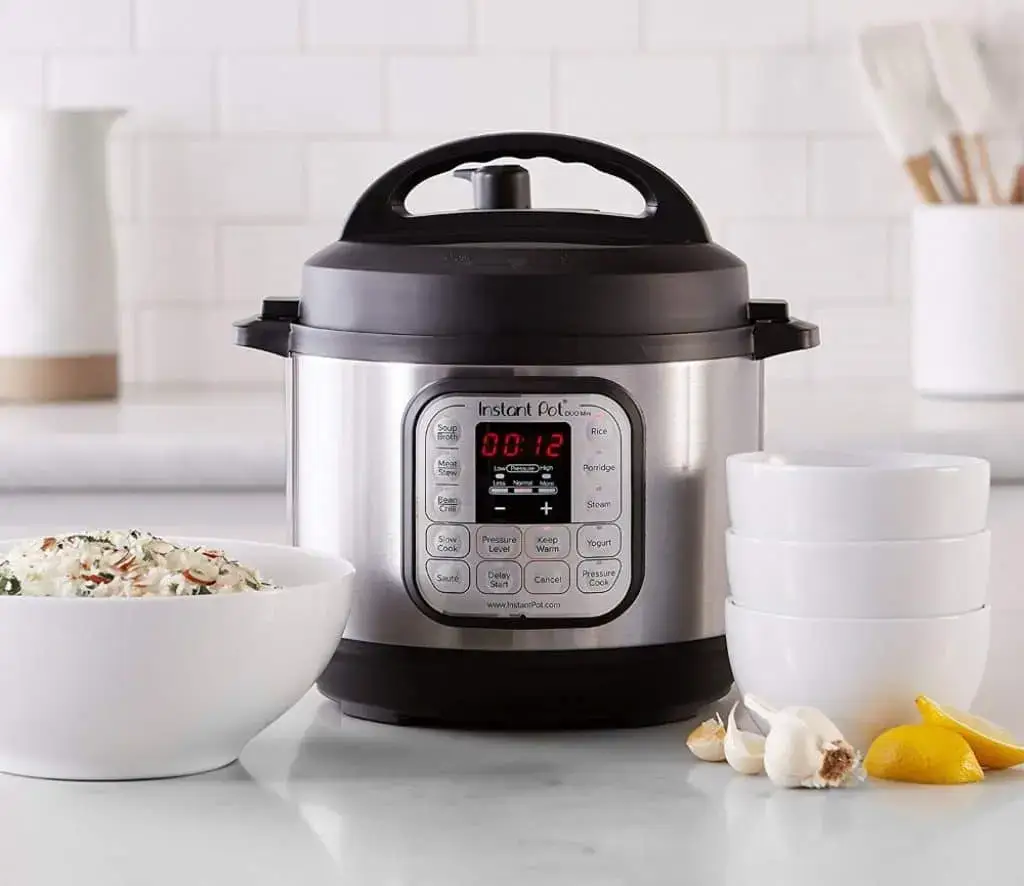
9. Best Stainless Steel Multicooker — Instant Pot Duo 7-in-1

The Instant Pot Duo doesn't really belong in the same category as the dedicated rice cookers above—and that's precisely why it's useful to include.
Its main cooking pot is stainless steel, but the appliance itself is a 7-in-1 multicooker.
So instead of buying an appliance specifically designed around rice, you're buying one that can also pressure cook, slow cook, steam and handle a range of other meals.
What I like
Versatility.
If you're trying to reduce the number of appliances in your kitchen, the Instant Pot makes far more sense than buying a rice cooker that only does rice.
The stainless steel pot is also removable and durable.
What I don't like
It isn't my first choice if rice is your number-one priority.
Dedicated rice cookers generally make more sense for people who cook rice constantly and want the most straightforward rice-focused experience.
Who should buy it
Buy it if you want one stainless-steel-pot appliance that can handle rice and a lot more.
Skip it if: You want the best possible dedicated rice cooker.
Pros
Cons
Things to Consider
Whether you cook rice occasionally or regularly, you can't ignore the convenience offered by rice cookers. Of course, you still have to go through the pre-cooking steps of washing and measuring the rice, oil, and water.
However, once that's done, you can skip the hassle of checking on your rice constantly because your stainless steel rice cooker will automatically complete the cooking process and keep your food warm until it's ready to be served.
Things to consider before buying a stainless steel rice cooker
Stainless Steel Rice Cooker Buying Guide
Buying a rice cooker with a stainless steel inner pot isn't as simple as looking for the words “stainless steel” in the product title. The most important question is where the stainless steel is used.
A cooker can have a stainless steel exterior but a coated aluminum cooking pot. If you're specifically looking for a rice cooker with a stainless steel inner pot, that distinction matters.
Here's what to check before you buy.
1. Make Sure the Cooking Pot Is Actually Stainless Steel
This is the first thing I'd check.
Don't assume a rice cooker is stainless steel just because the exterior is stainless steel.
Look at the manufacturer's specifications for the inner cooking pot or inner bowl.
You want wording like:
- Stainless steel inner pot
- 304 stainless steel cooking pot
- 316 stainless steel inner pot
- Uncoated stainless steel
- 3-ply stainless steel inner pot
Be cautious with terms like:
- Stainless steel exterior
- Stainless steel housing
- Stainless steel lid
- Stainless steel steamer basket
These don't confirm what the rice is actually cooked in.
2. Look for an Uncoated Cooking Surface
A stainless steel pot can still be coated, so check carefully.
If your goal is to avoid nonstick coatings, look for confirmation that the food-contact surface is uncoated stainless steel.
Buffalo, for example, clearly states that some of its SUS316 models use an uncoated stainless steel cooking pot. That level of clarity is what you should look for.
3. Consider the Stainless Steel Grade
You may see 304 or 316 stainless steel.
- 304: very common, widely used in cookware
- 316: more corrosion-resistant, often used in premium models
However, grade alone doesn't determine performance. A well-designed 304 pot can outperform a poorly designed 316 one in real use.
4. Check the Pot Construction
Stainless steel pots vary in build quality.
Single-layer stainless steel
Simple and common in budget models. Works fine for basic cooking.
Multilayer or clad stainless steel
Combines stainless steel with materials like aluminum for better heat distribution. Found in higher-end cookers.
Which should you choose?
- For durability and simplicity: single-layer is fine
- For better heat control: multilayer is preferable
5. Choose the Right Capacity
Capacity is often listed inconsistently, so be careful.
Some brands use uncooked rice cups, others use cooked output.
For 1–2 people
Small cookers are more practical and space-saving.
For families
Mid-size models (around 6–10 cups uncooked) are more suitable.
For large households or meal prep
10+ cup uncooked models are better.
Choose based on real usage, not maximum capacity.
6. Decide Whether You Need Induction Heating
Basic cookers use a bottom heating plate. Premium models use induction heating (IH) for more even heat control.
Conventional heating
- Affordable
- Simple
- Good for everyday rice
Induction heating
- More precise
- Better texture control
- Higher price
IH is nice to have, not essential for most users.
7. Decide Whether You Need Pressure Cooking
Some premium models combine pressure + induction cooking.
This improves texture control and expands cooking options, but also increases cost and complexity.
If you just want simple rice cooking, pressure is unnecessary.
8. Look at Cooking Programs
Basic models may only have a few modes, while advanced ones include:
- White rice
- Brown rice
- Porridge
- Steam
- Quick cook
More programs aren't always better—reliability matters more than quantity.
9. Don't Ignore the Keep-Warm Function
Keep-warm is very useful, but not perfect.
Rice can dry out or change texture if held too long. For best results, avoid leaving rice in the cooker for extended periods.
10. Check How Easy the Pot Is to Clean
Stainless steel is durable but can stick more than nonstick.
Sticking usually happens when:
- Water ratio is off
- Rice isn't rinsed
- Rice sits too long after cooking
The advantage is that stainless steel can handle soaking and scrubbing without damage.
11. Check Included Accessories
Useful extras include:
- Rice cup
- Rice paddle
- Steaming tray
- Measuring marks
- Removable lid
A steaming basket is especially useful for one-pot meals.
12. Consider Counter Space
Some rice cookers, especially IH or pressure models, are bulky.
Check dimensions and make sure the lid can open fully under your cabinets.
13. Check Replacement Pot Availability
Before buying, see if replacement inner pots are available.
This matters for long-term use, especially with premium models. Pots are not always interchangeable between brands.
14. Don't Buy Based on “Healthy” Marketing Alone
Marketing terms like “toxin-free” or “chemical-free” are often exaggerated.
The only thing that really matters is:
What material is actually used for the cooking surface?
That is the key specification to compare.
Stainless Steel Rice Cooker vs. Nonstick: Which Should You Buy?
If you're still undecided, this is the simplest way to think about it.
Choose stainless steel if you prioritize:
- An uncoated cooking surface
- Long-term durability
- Scratch resistance
- A cooking pot that doesn't rely on a conventional nonstick coating
- The ability to clean the pot more aggressively when necessary
Choose nonstick if you prioritize:
- Easy cleanup
- Minimal sticking
- Convenience
- Softer rice release from the cooking pot
Neither choice is automatically right for everyone.
For this particular guide, however, we're focusing on stainless steel because that's what many shoppers specifically want.
How to Prevent Rice From Sticking to a Stainless Steel Pot
Sticking is probably the biggest adjustment when switching from a nonstick rice cooker.
The good news is that it usually isn't difficult to manage.
Use the Correct Water Ratio
Start with the measurements recommended by your rice cooker's manufacturer.
Don't automatically use the ratio you've memorized from another rice cooker. Different pots, rice varieties and cooking systems can produce different results.
Rinse the Rice
Rinsing removes excess surface starch, which can contribute to stickiness.
The exact amount of rinsing depends on the type of rice you're cooking.
Let the Rice Rest
When the cooking cycle finishes, give the rice a few minutes before serving.
This allows moisture to redistribute through the rice and can make it easier to remove from the bottom.
Use the Right Utensil
Use the rice paddle supplied with the cooker or a suitable wooden or silicone utensil.
Avoid using sharp metal utensils to scrape aggressively across the bottom of the pot.
Soak Instead of Scraping
If rice has dried onto the bottom, add warm water and let it soak.
This is usually much easier than trying to remove hardened rice immediately.
FAQs
Is stainless steel better than nonstick for a rice cooker?
It depends on your priorities. Stainless steel is attractive if you want an uncoated cooking surface and long-term durability. Nonstick is generally easier when it comes to preventing rice from sticking and cleaning the pot.
Does rice stick to stainless steel rice cookers?
Yes, it can. Stainless steel doesn't have the easy-release characteristics of a conventional nonstick surface. Correct water measurements, rinsing, resting the rice and soaking the pot after cooking can help reduce the problem.
What is the best stainless steel rice cooker for a family?
For a larger family, consider a 10-cup-class cooker such as the Buffalo IH SUS316 or CUCKOO CRP-OHTR1009FWS. The right choice depends on whether you want a simple cooker or premium induction and pressure-cooking features.
Is 304 stainless steel good for a rice cooker?
Yes. 304 stainless steel is commonly used in food-contact cookware and appears in several stainless-steel rice cookers. The overall design of the pot and cooker matters more than simply choosing a model based on the number “304.”
Is 316 stainless steel better than 304?
316 and 304 have different compositions and properties, but a higher number doesn't automatically mean a better rice cooker. Consider the complete appliance, including its heating system, pot construction, cooking performance, capacity and price.
Can you cook brown rice in a stainless steel rice cooker?
Yes. Many stainless-steel rice cookers support brown rice. However, the cooking time and water requirements vary by model and rice variety, so use the manufacturer's recommended settings.
Are stainless steel rice cookers hard to clean?
They can require slightly more work than nonstick pots because cooked rice can stick to stainless steel. The advantage is that an uncoated stainless pot doesn't have a conventional nonstick coating that can be damaged by normal cleaning.
Can you replace a nonstick rice cooker pot with a stainless steel pot?
Usually, you shouldn't assume that you can. Rice cookers are designed around the dimensions, shape and material of their specific cooking pots. A replacement pot should be one specifically designed and approved for that cooker.
Can I store the food in the stainless steel bowl after cooking?
Stainless steel rice cookers are a great investment because you can both cook and store your food in them easily without worrying about the food going bad or reacting with the metal. Steel is a non-reactive metal that won't take away the natural flavors or aromas of your food.
Additionally, stainless steel cookers don't have any coatings like Teflon, making them safe and healthy for cooking food with high nutritional value. Steel also doesn't react with acidic foods or syrups and is easy to clean without chipping, peeling, or rusting.
How should I clean my stainless steel rice cooker?
It's best to clean your stainless steel rice cooker with hot water and dishwashing liquid. Most rice cookers have detachable steel bowls, which makes cleaning quick and easy. Once detached, remove any food particles from the bowl and wash it carefully.
Then, hand dry the bowl with a non-abrasive cloth to prevent drying marks and water spots on the surface. Alternatively, you can use natural cleaning solutions such as lemon, vinegar, or apple cider, which are inexpensive and effective at removing tough food stains.
How long do stainless steel rice cookers last?
The lifespan of stainless steel rice cookers can vary from 2 to 8 years or more, depending on their quality. Some stainless steel cookers may not last more than a year due to poor quality materials or improper care.
To ensure the longevity of your rice cooker, clean it with a soft sponge and avoid over-boiling or reheating food inside it. Also, don't leave food inside for extended periods on the keep-warm mode, as prolonged heating can damage the coating of old-style inner steel pots.
Our Verdict
After comparing these models, the Aroma ARC-753SG is our top pick for most people. It gives you a genuine stainless-steel inner pot, simple operation, and a reasonable price without adding features you may never use.
If you want something more premium, the Buffalo IH SUS316 is the standout upgrade, with induction heating and an uncoated 316 stainless-steel cooking pot.
For shoppers on a tight budget, the Elite Gourmet ERC006SS is hard to beat, while the CUCKOO CRP-OHTR1009FWS is the better choice if rice quality and advanced cooking technology matter more than price.
Ultimately, the best choice comes down to one thing: how much you want to spend for better cooking performance and features.