If you're stuck between the Vitamix 7500 and the Vitamix 750, you're not choosing between a good blender and a great blender.
You're choosing between two elite machines from Vitamix — and trying to justify a $70 difference without regretting it later.
Let’s make this simple.
- Both have the same motor.
- Both use the same 64-oz container.
- Both pulverize ice like it insulted them.
So why does one cost more?
That’s exactly what we’re breaking down — clearly, honestly, and without the marketing fluff.
List of Contents
- Vitamix 7500 vs 750: Quick Answer
- What’s Actually the Same?
- Vitamix 7500 vs 750 Differences between Vitamix 750 and 7500
- The Hidden Differences Most Reviews Don’t Mention
- Full Specification Comparison
- Vitamix 7500 vs 750 Pros and Cons
- Who Should Buy the Vitamix 7500?
- Who Should Buy the Vitamix 750?
- Frequently Asked Questions
- Vitamix 7500 vs 750 Honest Final Verdict
Vitamix 7500 vs 750: Quick Answer
The Vitamix 7500 and Vitamix 750 have the same 2.2 HP motor and 64 oz container.
The main difference is that the 750 includes 5 preset programs and automatic shut-off, while the 7500 is fully manual and costs less.
Best for value: Vitamix 7500
Best for convenience: Vitamix 750
That 4–5 sentence block alone can capture the featured snippet.
What’s Actually the Same?
Before we get dramatic about differences, understand this:
In terms of raw blending performance, these two machines are equals.
Free Cookbook Included
If you struggle with recipes and ingredients, this is by far the most wonderful thing.
When you buy a Vitamix 7500 blender or a Vitamix Pro Series 750, you will receive a cookbook filled with tasty recipes that you can create with the help of these two machines. For starters, it's fantastic!
Motor Power
Both use a 2.2 HP motor.
That means:
- Silky smoothies in under 30 seconds
- Almond butter without overheating
- Hot soup from friction in 5–6 minutes
- Ice turned into snow, not shards
There is no “stronger” model here. Same torque. Same blade speed. Same muscle.
If someone tells you the 750 blends better — they’re confusing features with power.
Fan Cooled Motor
Both models have a motor that prevents outside air from freely passing through the interior of the blenders.
This is one of the most important things that contributes to the models' functionality and makes them good value for money.
64 oz Low-Profile Container
Both come with the same 64-ounce low-profile container.
Why that matters:
- Fits under standard kitchen cabinets
- Wide base = better vortex for thick blends
- Ideal for families or meal prep
- Handles small and large batches well
This is not the tall narrow container from older Vitamix models. It’s the modern, kitchen-friendly design.
Blade System

Both use hardened, aircraft-grade stainless steel blades.
Not sharp like knives. Blunt on purpose.
They pulverize through speed and force, not slicing.
That’s why they last years without sharpening.
Build Quality
Heavy base. Solid switches. No rattling plastic nonsense.
Both feel like professional equipment because they basically are.
These aren’t department store blenders pretending to be premium.
Warranty
7-year full warranty.
That’s not marketing fluff. That’s confidence.
Very few appliance brands back their motors that long.
Vitamix 7500 vs 750 Differences between Vitamix 750 and 7500
This comparison comes down to control and convenience. Not power. Not durability. Control.
Controls: Manual vs Preset Intelligence
This is where the models split.
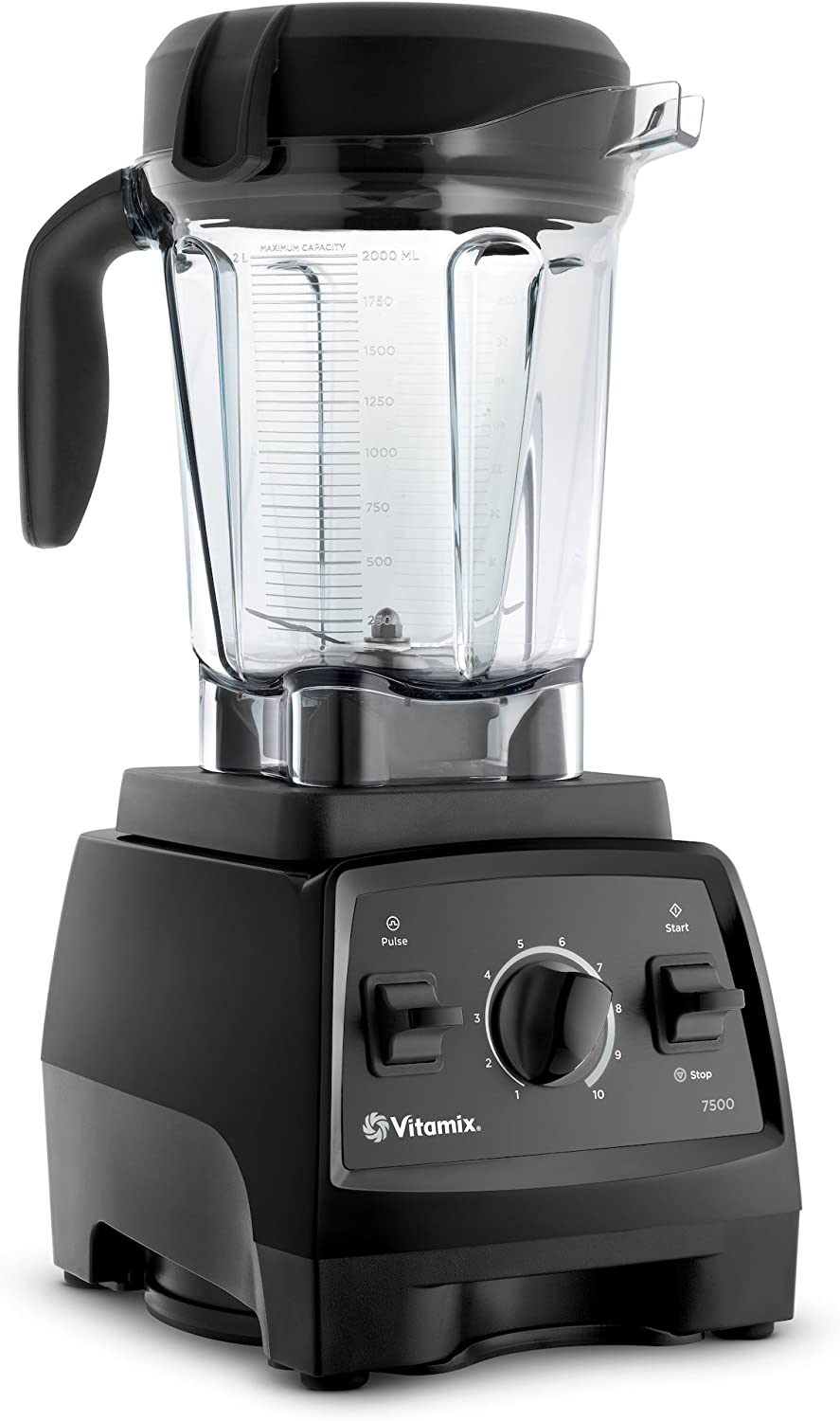
Vitamix 7500 – Pure Manual Control
You get:
- Power switch
- Pulse switch
- 10-speed variable dial
That’s it.
You control speed. You control duration. You stop it when it’s done.
Some people love that. It feels mechanical. Intentional. Direct. You’re the pilot.
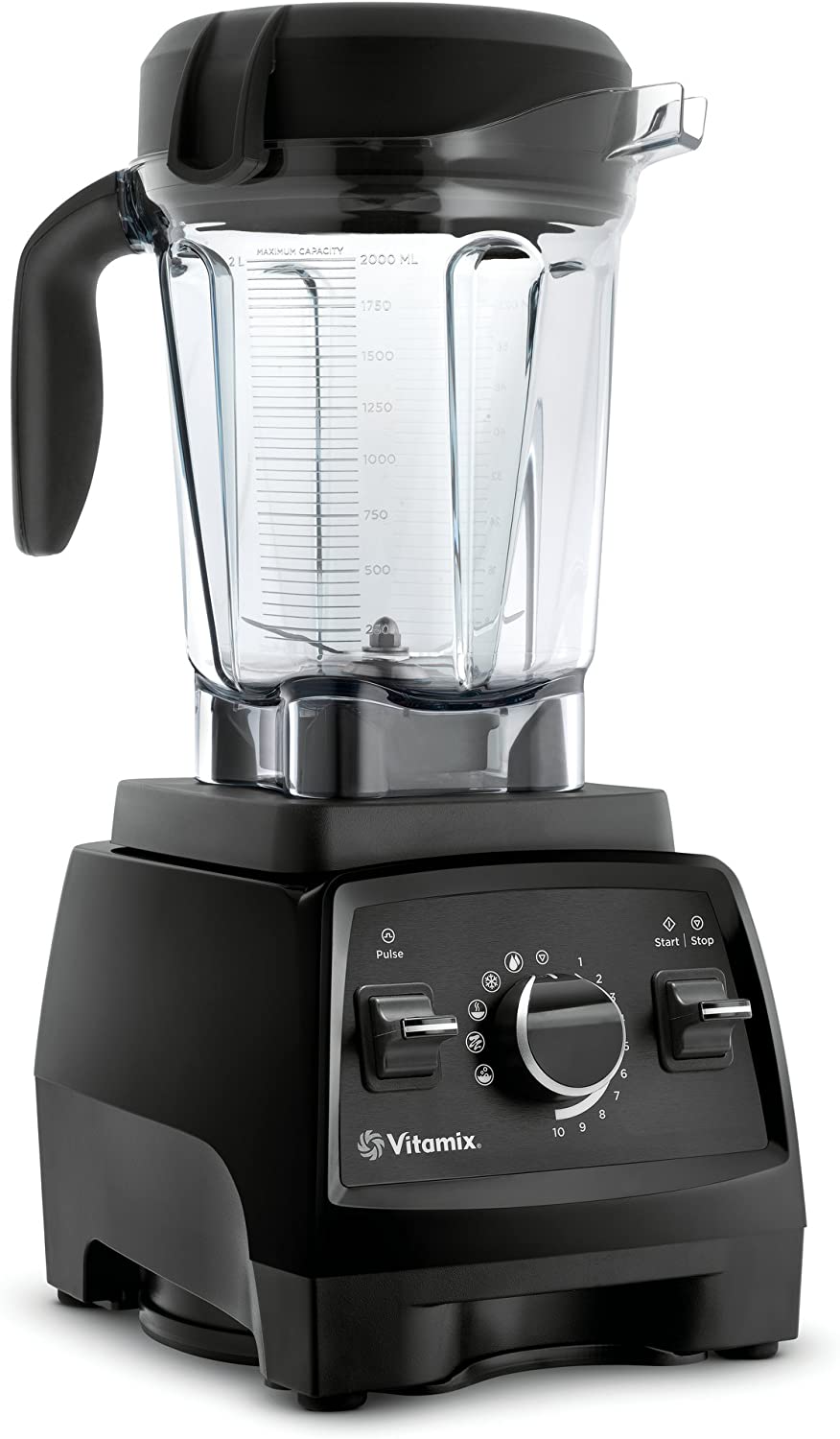
Vitamix 750 – Smart Preset Programs
The 750 includes everything the 7500 has — plus five preset programs:
- Smoothies
- Hot Soup
- Frozen Desserts
- Purees
- Self-Clean
Press one button. It ramps speed automatically. It shuts off when finished. You can literally walk away. That’s the $70 difference.
Does That Actually Matter?
Yes — depending on how you use it.
If you blend every morning before work, presets save time and attention.
If you’re multitasking (kids, emails, coffee brewing), presets feel luxurious.
But if you don’t mind standing there for 45 seconds adjusting a dial, the 7500 does the same job.
No compromise in results.
Noise Level: Is One Quieter?
Let’s be realistic.
These are 2.2 HP motors. They are not whisper machines.
However:
The 750 has slightly improved internal sound dampening. Not silent. Not dramatic. Just a little more refined.
If noise sensitivity matters in your household, that’s a point for the 750.
If not, the 7500 is perfectly acceptable.
Real-World Performance Test
Let’s move beyond specs.
Here’s what actually matters in a kitchen.
Smoothie Test
Frozen strawberries. Banana. Spinach. Almond milk. Ice.
Both machines:
- Blend completely smooth in about 30 seconds
- No leafy bits
- No ice chunks
- Zero grit
Texture difference? None.
Ice Crushing Test
Two cups of ice. Both turn it into snow in under 10 seconds.
Cheap blenders bounce ice around. These obliterate it.
Nut Butter Test
Roasted almonds.
Both:
- Create smooth almond butter in under 2 minutes
- No overheating
- No motor strain
Again — identical performance.
Durability: What Happens After Year 3?
High-performance blenders aren’t about week one.
They’re about year four.
Both the Vitamix 7500 and the Vitamix 750 are built on the same motor platform. Same cooling system. Same blade assembly. Same container construction.
Translation: mechanically, they age the same.
The motor is fan-cooled and designed for repeated heavy blending without overheating. That matters if you make nut butters, dough, or thick smoothie bowls regularly.
What typically wears first?
- Drive socket (after years, inexpensive to replace)
- Container (after heavy daily use, not the base itself)
The motor base? Rarely the issue.
This is where Vitamix quietly dominates the category. Seven-year warranty isn’t marketing — it’s confidence in their engineering.
Long-term durability verdict: Tie.
Cleaning: Is One Easier?
Both models are self-cleaning.
Add:
- Warm water
- A drop of dish soap
- Run on high for 30–60 seconds
- Rinse
Done.
However, the 750’s dedicated clean preset adds one convenience: you press it and walk away.
The 7500? You turn the dial manually and stop it yourself.
Results are identical.
But once again, the 750 wins slightly on automation.
Price & Value Breakdown
Typically:
- 7500 → Around $500–$530
- 750 → Around $570–$600
For many buyers, $70 isn’t huge.
But psychologically, crossing the $600 line feels different than staying in the low $500s.
If you don’t care about presets, the 7500 is the smarter buy financially.
If you want a slightly more premium experience, the 750 justifies itself.
So Why Would Anyone Pay More?
Convenience.
The 750 is for people who want automation.
The 7500 is for people who want value.
That’s the core of this debate.
The Hidden Differences Most Reviews Don’t Mention
Let’s talk about the subtle things.
Workflow Psychology
Manual blending requires attention.
Preset blending creates freedom.
That difference matters more than most buyers realize.
If you’re someone who multitasks in the kitchen, the 750 changes your experience more than it changes your results.
Resale Value
The 750, being a “Pro Series” model, often holds resale value slightly better.
If you upgrade appliances every few years, that matters.
If you keep things until they die, ignore this.
Learning Curve
The 7500 teaches you how to blend properly.
The 750 hides the learning curve behind automation.
Neither is better — it depends on whether you enjoy control or prefer convenience.
Full Specification Comparison
Here’s the clean, no-nonsense breakdown serious buyers want:
Feature | Vitamix 7500 | Vitamix 750 |
|---|---|---|
Motor Power | 2.2 HP | 2.2 HP |
Container Size | 64 oz Low-Profile | 64 oz Low-Profile |
Preset Programs | No | 5 |
Variable Speeds | 10 | 10 |
Pulse Feature | Yes | Yes |
Automatic Shut-Off | No | Yes (via presets) |
Self-Clean | Manual | Preset Program |
Warranty | 7 Years | 7 Years |
Noise Level | Loud | Slightly Quieter |
Typical Price | ~$500–$530 | ~$570–$600 |
Vitamix 7500 vs 750 Pros and Cons
Vitamix 7500
Pros
Cons
Vitamix 750
Pros
Cons
Who Should Buy the Vitamix 7500?
You’ll love it if:
- You prefer manual control
- You want maximum power for minimum cost
- You blend 3–4 times per week
- You don’t need preset automation
- You’re upgrading from a mid-range blender
It’s the performance bargain of the lineup.
Who Should Buy the Vitamix 750?
You’ll appreciate it if:
- You blend daily
- You want walk-away functionality
- You value small quality-of-life upgrades
- You cook soups and frozen desserts often
- You don’t mind paying more for convenience
It feels more polished.
Frequently Asked Questions
Is the Vitamix 7500 discontinued?
No. The Vitamix 7500 is still widely available and remains one of the brand’s most popular manual-control models.
What is the difference between Vitamix 750 and 7500?
The 750 includes five preset programs and automatic shut-off.
The 7500 offers manual speed control only.
Performance and motor power are identical.
Is the Vitamix 750 more powerful than the 7500?
No. Same motor. Same blending strength. Same torque.
The difference is presets — not power.
Is the Vitamix 750 worth the extra money?
If you value automation and walk-away blending, yes.
If you don’t care about presets, no. Simple.
Are both good for hot soup?
Yes. Both can heat soup through blade friction in about 5–6 minutes. No stovetop required.
Which is better for smoothies?
Identical results. Texture, speed, smoothness — no difference.
Is the 750 quieter?
Slightly. Not dramatically. You’ll still know it’s on.
Which one is better for daily heavy use?
The 750. Not because it’s stronger — but because presets make daily blending easier and more efficient.
Vitamix 7500 vs 750 Honest Final Verdict
Let’s stop circling it.
If performance is your only concern, buy the 7500 and save your money. It blends exactly the same.
If experience matters — if you want a blender that feels more refined, more convenient, more “premium” — buy the 750. It’s the better daily driver.
Here’s the bottom line:
- Best Value → Vitamix 7500
- Best Convenience → Vitamix 750
- Best Overall Experience → Vitamix 750
- Best Performance Per Dollar → Vitamix 7500
Neither choice is wrong. You’re not choosing between good and bad. You’re choosing between control and automation. And once you understand that, the decision becomes obvious.