Choosing between aluminum and ceramic cookware sounds straightforward until you start comparing actual pans. The two labels describe different things, and treating them as direct opposites can lead to buying the wrong cookware for your needs.
Aluminum describes the material used to make the pan body. Ceramic usually refers either to a solid ceramic vessel or, more commonly in nonstick cookware, to a coating applied over an aluminum body. In other words, a pan can be both aluminum and ceramic-coated.
That distinction matters when you compare heat performance, food release, durability, and safety. A ceramic-coated aluminum skillet can heat efficiently and release food easily, while hard-anodized aluminum with a traditional nonstick coating offers a different set of trade-offs. Stainless steel is another option if long-term durability matters more than nonstick convenience.
In this guide, we’ll explain what each material actually means, compare the differences that affect everyday cooking, cover the health and safety questions, and look at representative cookware sets to help you choose with confidence.
Five Cookware Sets Worth Comparing


Quick Comparison: Aluminum vs Ceramic Cookware
Ceramic-Coated Aluminum vs Hard-Anodized Aluminum vs Stainless Steel
| Construction | Cooking surface | Induction | Best suited to | ||
|---|---|---|---|---|---|

GreenPan Valencia Pro 11-Piece
Best ceramic-coated option
|
Hard-anodized aluminum + ceramic | Ceramic nonstick | Yes | Easy-release cooking | Check price |

All-Clad HA1 Expert 10-Piece
Best hard-anodized aluminum option
|
Hard-anodized aluminum + PTFE | PTFE nonstick | Yes | Everyday nonstick | Check price |
All-Clad D3 Stainless Steel 10-Piece
Best premium stainless-steel option
|
Tri-ply stainless + aluminum core | Stainless steel | Yes | Searing and durability | Check price |

Caraway 16-Piece Ceramic Set
Best premium ceramic-coated set
|
Aluminum + ceramic coating | Ceramic nonstick | Yes | Premium easy-release cooking | Check price |

Cuisinart MultiClad Pro 12-Piece
Best-value stainless-steel set
|
Tri-ply stainless + aluminum core | Stainless steel | Yes | Stainless value and versatility | Check price |
| Feature | Aluminum cookware | Ceramic-coated cookware |
|---|---|---|
| Main construction | Aluminum body | Usually aluminum body with ceramic nonstick coating |
| Heat conductivity | Excellent | Depends largely on the aluminum body |
| Food release | Depends on the cooking surface | Excellent when new and properly maintained |
| High-heat cooking | Generally suitable, depending on construction and coating | Best at low to medium heat |
| Durability | Depends on whether it is bare, anodized, or coated | Coating can lose nonstick performance over time |
| Weight | Generally lightweight | Usually lightweight |
| Cleaning | Depends on the surface | Usually easy to clean |
| Induction compatibility | Requires a compatible magnetic base | Depends on the cookware’s base |
| Best feature | Fast, responsive heating | Convenient nonstick cooking |
| Main drawback | Bare aluminum requires appropriate care | Nonstick performance gradually declines |
- Aluminum heats quickly and distributes heat efficiently, especially when the body is thick or clad.
- Ceramic-coated aluminum offers convenient food release and is available with coatings made without intentionally added PFAS.
- Hard-anodized aluminum has a treated, durable exterior and is available with different interior coatings.
- Both categories include options at a range of price points and weights.
- Bare aluminum can react with acidic foods and may discolor; check the manufacturer’s care guidance.
- Ceramic nonstick coatings gradually lose food-release performance and usually do not last as long as uncoated stainless steel.
- The word ceramic does not tell you what the pan body is made from; many ceramic nonstick pans are aluminum underneath.
- Not every aluminum or ceramic-coated pan is induction compatible; check for a magnetic base.
The important distinction: Ceramic-coated aluminum is both aluminum cookware and ceramic nonstick cookware. The aluminum provides the structure and heat conduction; the ceramic coating provides the cooking surface.
What Is Aluminum Cookware?
Aluminum is popular in cookware manufacturing because it conducts heat efficiently, heats relatively quickly, and is considerably lighter than many other cookware materials.
Instead of waiting a long time for a heavy pan to warm up, an aluminum pan generally responds quickly to changes in burner temperature. This makes it useful for everyday cooking tasks such as sautéing vegetables, preparing sauces, frying eggs, and simmering food.
However, not all aluminum cookware is made the same way.
Bare Aluminum
Bare aluminum has no additional nonstick coating on its cooking surface. It heats quickly and is often affordable, but it can react with acidic or salty foods under certain conditions.
Tomatoes, vinegar-based sauces, and citrus-heavy dishes can be particularly problematic when cooked or stored in bare aluminum for extended periods. The cookware may also discolor or transfer a metallic taste to food.
For most home cooks, coated or properly anodized aluminum is a more convenient choice.
Hard-Anodized Aluminum
Hard-anodized aluminum undergoes an electrochemical process that creates a harder, more corrosion-resistant surface than untreated aluminum.
It is popular because it combines aluminum’s heat-conducting properties with a more durable exterior.
However, hard anodizing does not automatically mean the pan is nonstick. Some hard-anodized cookware has a separate PTFE nonstick coating, while other products have ceramic nonstick interiors.
That distinction matters when comparing cookware for health, durability, and maintenance.
Cast Aluminum and Die-Cast Aluminum
Cast aluminum is made by pouring molten aluminum into a mold. Die-cast aluminum uses a more controlled casting process in which molten metal is injected into a mold under pressure.
These methods allow manufacturers to create cookware with thicker walls, shaped handles, and different structural designs.
Neither method automatically makes a pan healthier or more durable than every other aluminum pan. Construction quality, thickness, surface treatment, and coating are more important considerations.
What Is Ceramic Cookware?
The term ceramic cookware can refer to two very different products.
Traditional ceramic cookware is made from ceramic material, often clay-based material that is shaped and fired at high temperatures. It is different from ordinary metal cookware and can have different heating and handling characteristics.
Ceramic-coated cookware is generally made with an aluminum body and a ceramic-based nonstick coating applied to the cooking surface.
The second type is what most shoppers mean when comparing ceramic and aluminum nonstick pans.
Ceramic nonstick coatings are commonly made using a sol-gel process that produces a smooth, glass-like surface. They are designed to release food with less sticking and make cleaning easier.
Some manufacturers offer coatings made without intentionally added PFAS, including PTFE. However, consumers should check the exact product specifications rather than assuming every pan advertised as ceramic has the same chemical composition.
Why Ceramic-Coated Aluminum Is So Popular
Ceramic-coated aluminum combines two useful characteristics.
The aluminum body helps the pan heat efficiently, while the ceramic coating creates a smooth cooking surface that releases food easily when new.
This combination is particularly appealing for eggs, pancakes, fish, and delicate foods that can stick to stainless steel.
The downside is that the coating is not permanent. Repeated heating, cooking sprays, abrasive cleaning, and general wear can gradually reduce its nonstick performance.
Aluminum vs Ceramic Cookware: 8 Important Differences
1. Heat Conductivity and Distribution
Aluminum has a clear advantage when it comes to heat conductivity.
It transfers heat efficiently, which helps cookware warm up relatively quickly. This is one reason aluminum is widely used in both affordable cookware and premium multi-layer cookware.
Ceramic, on the other hand, is not necessarily the material responsible for distributing heat in ceramic-coated pans. In most ceramic nonstick sets, the aluminum body does the heavy lifting.
This means a well-designed ceramic-coated aluminum pan can heat just as effectively as a comparable aluminum pan with a different surface treatment.
Winner: Aluminum for heat conductivity.
2. Nonstick Performance
This is where ceramic-coated cookware has its biggest advantage over bare aluminum.
A good ceramic nonstick surface releases eggs, pancakes, and other delicate foods with relatively little oil. It also makes cleanup considerably easier.
Bare aluminum does not provide the same effortless release.
However, ceramic coatings tend to lose their nonstick performance with use. A pan that releases eggs perfectly when new may become less effective after months or years of regular cooking.
Winner: Ceramic-coated cookware for convenient food release.
3. Cooking Performance
For everyday cooking, the best choice depends more on the cooking surface than on the aluminum body. A ceramic-coated pan is convenient for eggs, omelets, pancakes, and fish, particularly over low to medium heat. Bare aluminum heats quickly but does not provide the same easy food release.
For browning meat, building fond, and making pan sauces, stainless steel is usually more versatile. A PTFE-coated hard-anodized pan offers another nonstick option, but it has a different coating chemistry from ceramic.
Best fit: Ceramic-coated cookware for delicate foods and quick cleanup; stainless steel for browning and higher-heat techniques.
4. Durability and Surface Wear
The aluminum body and the cooking surface age differently. Hard-anodizing makes the aluminum surface harder and more corrosion-resistant, but a separate nonstick coating can still wear. Ceramic coatings can scratch, stain, or gradually lose food-release performance; they are not indestructible.
Use silicone, wood, or nylon utensils unless the manufacturer explicitly permits metal, avoid abrasive pads, and do not stack pans without protection. A durable body does not guarantee a long-lasting nonstick surface.
Best fit: Hard-anodized aluminum for a tougher aluminum surface; stainless steel if you want to avoid relying on a nonstick coating.
5. Weight and Handling
Aluminum cookware is generally lighter than cast iron and many thick stainless-steel pans. Ceramic-coated aluminum is usually similarly manageable because the coating adds little weight. Actual handling depends on pan thickness, diameter, handle design, and base construction.
Winner: Usually a tie between comparable aluminum and ceramic-coated aluminum pans.
6. Cleaning and Maintenance
A new ceramic nonstick surface is usually easy to wipe clean, especially after cooking eggs or other delicate foods. To help preserve it, use low to medium heat, add a little oil when appropriate, let the pan cool before washing, and clean with a soft sponge and mild detergent.
Bare aluminum needs more care around acidic or salty foods, while anodized aluminum is less reactive than untreated aluminum. Follow the manufacturer’s cleaning instructions: dishwasher-safe does not necessarily mean dishwasher use is best for the life of a nonstick coating.
Winner: Ceramic-coated cookware for easy cleanup when the coating is in good condition.
7. Induction Compatibility
Aluminum itself is not magnetic, so an aluminum pan needs a compatible magnetic base to work on an induction cooktop. Ceramic-coated aluminum has the same requirement because the coating does not make the body induction-ready.
Check the exact model’s specifications and look for an induction symbol or an explicit statement from the manufacturer. Do not assume that every pan in a brand’s range is compatible.
8. Price and Overall Value
Basic aluminum cookware is often inexpensive, while hard-anodized and branded ceramic-coated sets can cost considerably more. A higher price may buy better construction, a more substantial base, or a stronger warranty, but it does not make a nonstick coating permanent.
For value, compare the exact set contents, compatibility with your cooktop, warranty terms, and expected replacement needs. If you want cookware to last for many years without depending on a nonstick surface, consider stainless steel.
Which Is Healthier: Ceramic or Aluminum Cookware?
This is one of the most important questions when choosing between these materials, but the answer is more nuanced than saying one is completely safe and the other is dangerous.
The health considerations depend on the condition of the cookware, the material contacting the food, the coating’s composition, and how the pan is used.
Is Aluminum Cookware Safe?
Aluminum is present naturally in food and the environment, and cookware can add to dietary exposure. Health Canada notes that worn or pitted aluminum cookware and foods high in acid or salt can increase transfer into food. It advises against cooking or storing acidic or salty foods for long periods in bare aluminum and recommends avoiding damaged cookware.
Anodized aluminum has a harder, more stable surface and reduces aluminum transfer compared with untreated aluminum, particularly with acidic foods. That does not make every pan indestructible: follow the manufacturer’s instructions and stop using cookware that is badly worn or damaged.
There is also a separate quality-control issue. The U.S. FDA has warned about certain imported aluminum-alloy cookware that may leach lead. Buy from a reputable manufacturer and avoid untraceable cookware with no clear food-contact information.
Is Ceramic Cookware Safer?
Ceramic-coated cookware can be a reasonable option if you want to avoid PTFE and other intentionally added PFAS in the cooking surface. However, the word ceramic is not a blanket safety certification, and claims such as “chemical-free” or “100% non-toxic” are too broad to be useful.
Check the exact product’s coating disclosure rather than relying on a brand name or a “granite” or “stone” finish. Traditional glazed ceramic cookware raises a different issue: some glazes or decorations can contain lead or cadmium, so choose food-contact products that meet the applicable standards.
What About PTFE and PFAS?
PTFE is a fluoropolymer in the PFAS family and is used in many conventional nonstick coatings. The German Federal Institute for Risk Assessment says properly used PTFE-coated cookware is not expected to cause adverse health effects, but warns against overheating an empty pan. Never preheat a nonstick pan for an extended period while empty, and follow the maker’s temperature limits.
“PFOA-free” and “PFAS-free” are not interchangeable claims. PFOA is one substance within the much larger PFAS family. If avoiding PFAS is your priority, look for a specific statement that the food-contact coating is made without intentionally added PFAS, and check whether that claim applies to the exact collection.
Is Ceramic-Coated Aluminum Cookware a Sensible Choice?
For many households, yes. A ceramic-coated aluminum pan combines an efficient aluminum body with a ceramic-based nonstick cooking surface. The key questions are whether the manufacturer clearly identifies the coating, whether the pan is suitable for your cooktop, and whether you are willing to care for a coating that will gradually wear.
Do not use a damaged pan simply because the aluminum body underneath still looks sound. Replace cookware when the food-contact surface is badly degraded, and follow the manufacturer’s care and temperature instructions.
Ceramic-Coated Aluminum vs Stainless Steel
Stainless steel is a useful alternative, but it is not the opposite of aluminum: many premium stainless-steel pans contain an aluminum core to improve heat distribution. In a fully clad pan, stainless steel forms the cooking surface while the aluminum core spreads heat. If you’re weighing the trade-offs in more detail, see our guide to ceramic vs. stainless steel cookware.
Choose ceramic-coated aluminum for easy release with delicate foods, provided you accept the coating’s finite lifespan. Choose stainless steel for browning, deglazing, and a durable cooking surface that does not depend on nonstick performance. A mixed kitchen with one nonstick skillet and a few stainless-steel pans is often more practical than buying a large set of either type.
Why All-Clad D3 Is Worth Considering
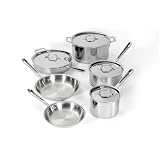
All-Clad D3 illustrates why stainless steel and aluminum are often used together. Its tri-ply construction bonds stainless steel layers around an aluminum core. The stainless-steel interior provides the cooking surface, while the aluminum core helps distribute heat.
It is not a ceramic or nonstick substitute, and food can stick if the pan is not preheated and used properly. Its appeal is long-term versatility for searing, sautéing, and pan sauces.
Best Cookware Sets to Consider in 2026
Rather than treating every cookware set as interchangeable, these recommendations focus on different cooking preferences and priorities. For a broader look at complete sets across materials and budgets, see our guide to the best cookware sets.
1. GreenPan Valencia Pro – Best Ceramic Nonstick Cookware
A ceramic-coated hard-anodized aluminum set for shoppers who want a PFAS-free nonstick cooking surface. Its aluminum body helps distribute heat, while the ceramic coating provides food release; treat the surface gently to extend its useful life.
Best for: Home cooks who want convenient nonstick cooking and a PFAS-free ceramic coating.
GreenPan Valencia Pro is one of the more interesting options for shoppers who prefer ceramic nonstick cookware.
The collection combines hard-anodized aluminum bodies with GreenPan’s Thermolon ceramic nonstick coating. This is an important distinction: the cookware is not made entirely from ceramic. It uses aluminum for its structure and a ceramic coating for the cooking surface.
The collection is designed for use on induction, gas, electric, and other compatible stovetops. Its diamond-reinforced coating and induction-ready base make it a more substantial option than basic ceramic-coated pans.
For everyday cooking, its biggest attraction is convenience. Eggs, pancakes, vegetables, and delicate foods are easier to release from a fresh ceramic nonstick surface than from uncoated stainless steel.
Why it stands out: Its combination of an aluminum body, ceramic nonstick surface, and induction compatibility makes it a practical everyday option.
What to consider: The coating will not remain in perfect nonstick condition forever. Even a premium ceramic pan needs sensible heat management and proper cleaning.
Verdict: A strong choice if you want ceramic nonstick cookware from an established cookware brand.
2. Caraway 16-Piece Ceramic Cookware Set – Best Premium Ceramic-Coated Aluminum Set
A larger ceramic-coated cookware collection with an aluminum body. It belongs in this comparison because the ceramic layer is the cooking surface, while aluminum provides the underlying structure and heat conduction.
Best for: Shoppers who want a coordinated ceramic nonstick cookware set with storage accessories and an aluminum body.
The Caraway 12-piece ceramic cookware set is a useful example of how ceramic and aluminum work together rather than compete as separate materials. The set has an aluminum body with a ceramic nonstick cooking surface, so the aluminum helps conduct heat while the coating provides the food-release properties.
This Amazon listing (ASIN B09RT1K8J1) identifies the Marigold 12-piece set. It includes a 10.5-inch frying pan, a 3-quart saucepan with lid, a 4.5-quart sauté pan with lid, a 6.5-quart Dutch oven with lid, four magnetic pan racks, and a canvas lid holder. The set is listed as compatible with gas, electric, and induction cooktops and oven-safe up to 550°F.
Caraway says its ceramic coating is made without intentionally added PTFE, PFOA, or PFAS. That makes it relevant for shoppers who want to avoid those substances in a nonstick cooking surface. It should not, however, be described as cookware made entirely from ceramic: the body is aluminum, and the ceramic material is the coating.
Why it stands out: The complete set configuration, induction compatibility, included storage accessories, and clearly identified aluminum-body/ceramic-coating construction.
What to consider: The ceramic surface needs careful use to preserve its food-release performance. Caraway recommends low-to-medium heat and handwashing; ceramic nonstick coatings can lose effectiveness over time. The set is also a more design-focused purchase than a basic budget cookware set.
Verdict: A strong option if you want a full ceramic-coated aluminum set and value its coordinated design and storage system. Choose it for convenient everyday nonstick cooking, not because it is solid ceramic or guaranteed to last as long as uncoated stainless steel.
3. All-Clad HA1 Expert – Best Hard-Anodized Aluminum Nonstick Cookware
This is a useful contrast to ceramic nonstick: HA1 uses a hard-anodized aluminum body with a traditional PTFE nonstick cooking surface. It should not be described as ceramic cookware.
Best for: People who want hard-anodized aluminum with conventional nonstick performance.
All-Clad HA1 Expert is worth considering if you prefer aluminum cookware but want something more substantial than an inexpensive nonstick set.
Its construction uses hard-anodized aluminum reinforced with a stainless steel base. The set is designed to distribute heat consistently, resist warping, and work on induction cooktops.
However, there is an important distinction that shoppers should understand: the standard HA1 Expert cookware uses a PTFE nonstick coating. It is not the same as the PFAS-free ceramic version.
That makes it a useful comparison against GreenPan Valencia Pro.
The HA1 is designed for convenient everyday cooking, including eggs, fish, pancakes, and other foods that benefit from a nonstick surface. Its tempered glass lids and double-riveted stainless steel handles add practical features.
Why it stands out: The combination of hard-anodized aluminum, an induction-compatible base, and a conventional nonstick cooking surface.
What to consider: Its PTFE coating needs appropriate care and should never be overheated. It is also not the right choice for shoppers specifically seeking PFAS-free cookware.
Verdict: A strong option for shoppers who prioritize traditional nonstick performance and well-designed aluminum cookware.
4. All-Clad D3 Stainless Steel – Best Premium Stainless Steel Cookware Set
A fully bonded tri-ply set with a stainless-steel cooking surface and an aluminum core. It demonstrates why stainless steel and aluminum are not mutually exclusive: the core improves heat distribution while food contacts stainless steel.
Best for: Serious home cooks who want durable cookware without a nonstick coating.
If I were choosing a premium stainless steel cookware set to compare with ceramic and aluminum, All-Clad D3 would be one of my first recommendations.
This is not simply a stainless steel pan with a thin metal base. The D3 collection uses fully bonded tri-ply construction, with an aluminum core sandwiched between stainless steel layers.
That aluminum core is important because it helps distribute heat more efficiently than a basic single-layer stainless steel pan.
The stainless steel cooking surface is designed for browning, searing, sautéing, and deglazing. When used correctly, it can develop the browned bits that make excellent pan sauces.
The D3 10-piece set is particularly useful for a household that wants a complete cookware collection. Depending on the specific version, the set includes frying pans, saucepans, a sauté pan, and a stockpot.
All-Clad also offers different D3 set configurations, so check the included pan sizes before purchasing.
Why it stands out: Its fully bonded tri-ply construction, aluminum core, durable stainless steel cooking surface, induction compatibility, and long-term versatility.
What to consider: It is a premium investment, and stainless steel requires a little more cooking technique. Preheating properly and using enough cooking fat helps prevent food from sticking. It is also heavier than many basic aluminum nonstick pans.
Verdict: The strongest long-term alternative in this comparison for someone who wants to move beyond nonstick cookware. It is not a ceramic replacement, but it offers a different kind of value: durability and versatility without a nonstick coating.
5. Cuisinart MultiClad Pro 12-Piece – Best-Value Stainless Steel Alternative
A more accessible fully clad stainless-steel option with an aluminum core. It is a practical comparison point for readers deciding whether ceramic nonstick convenience or durable stainless-steel construction better suits their cooking.
Granite-Style vs Ceramic Cookware
“Granite” usually describes a speckled appearance or a marketing category, not a pan made from solid granite. The underlying body and coating vary by model: some granite-style pans use PTFE-based nonstick, while others use different coating systems. Check the manufacturer’s specification for the exact pan rather than assuming that granite-style means ceramic or PFAS-free.
Ceramic-Coated vs PTFE-Coated Hard-Anodized Aluminum
This is a more useful comparison than “ceramic vs hard-anodized,” because hard-anodizing describes the aluminum surface treatment while ceramic and PTFE describe different nonstick coatings. A hard-anodized pan can have either type of coating.
Choose a ceramic-coated model if you want a coating made without intentionally added PFAS and the manufacturer verifies that claim. Choose a PTFE-coated model if you prefer conventional nonstick performance and are comfortable following its temperature and care instructions. Neither coating should be overheated or treated as permanent.
Sources and Further Reading
Health Canada: The Safe Use of Cookware and Bakeware — guidance on aluminum, anodized aluminum, and lead or cadmium in ceramic, enamel, and glass cookware.
U.S. FDA: Letter to Retailers and Distributors of Cookware — warning about certain imported aluminum-alloy cookware that may leach lead.
German Federal Institute for Risk Assessment: PTFE Nonstick Cookware — safe-use guidance and the importance of avoiding overheating.
GreenPan: Coating and Material Disclosure — manufacturer information about Thermolon coating and the aluminum core used in its cookware.
Aluminum vs Ceramic Cookware FAQs
Is ceramic cookware better than aluminum cookware?
Neither is automatically better because aluminum describes the pan body, while ceramic often describes its nonstick coating. Ceramic-coated aluminum offers easier food release; uncoated or hard-anodized aluminum is valued for heat conduction and durability. Choose based on the cooking surface, construction, and care requirements.
Which is healthier: ceramic or aluminum cookware?
Neither material is automatically healthier in every situation. A reputable ceramic-coated pan can suit shoppers who want to avoid intentionally added PFAS in the coating. Properly manufactured anodized aluminum and quality stainless steel are also reasonable options when used as directed.
Is ceramic-coated aluminum cookware safe?
Ceramic-coated aluminum from a reputable manufacturer can be suitable for everyday cooking. Check the manufacturer’s coating disclosures, follow its heat limits, avoid overheating an empty pan, and replace cookware when the coating is badly damaged or no longer performs as intended.
Is ceramic nonstick better than traditional nonstick?
Ceramic nonstick is an option for people seeking a coating made without intentionally added PFAS. Traditional PTFE nonstick often provides excellent food release and may retain it longer with careful use. Both types need appropriate heat and utensil care.
Is hard-anodized aluminum better than ceramic cookware?
Hard-anodized describes a treated aluminum body; ceramic usually describes a coating or a solid ceramic material. A hard-anodized pan can also have a ceramic interior, so compare the actual cooking surface and construction rather than treating the terms as direct opposites.
Is die-cast aluminum better than ceramic?
Die-cast aluminum describes a manufacturing process, not a cooking-surface coating. A die-cast pan may have a ceramic or another nonstick coating. Thickness, coating quality, construction, and heat distribution matter more than the label alone.
Is CAROTE cookware aluminum or ceramic?
Many CAROTE sets use aluminum bodies with a nonstick coating, but the coating and construction can vary by collection. Check the exact model’s specifications; a granite-style speckled finish does not by itself prove that the coating is ceramic.
Does ceramic cookware work on induction?
Some ceramic-coated aluminum cookware works on induction, but the aluminum body alone is not magnetic. The pan needs a compatible magnetic base. Check the manufacturer’s induction-compatibility information for the exact set.
Is stainless steel better than ceramic cookware?
Stainless steel is generally better for durability, browning, searing, and cooking without a nonstick coating. Ceramic nonstick is more convenient for delicate foods and quick cleanup, but its release performance can decline over time. Many kitchens benefit from having both.
Does All-Clad D3 contain aluminum?
Yes. All-Clad D3 uses bonded tri-ply construction with an aluminum core between stainless-steel layers. The core helps distribute heat, while stainless steel forms the cooking surface.
Is All-Clad D3 worth buying?
It can be a worthwhile premium choice for frequent cooks who want durable, versatile stainless-steel cookware. Its value depends on your budget and whether you are comfortable using stainless steel, which requires more attention to preheating and cooking fat than nonstick pans.
Can ceramic-coated aluminum cookware be used with metal utensils?
Follow the cookware maker’s instructions. Even when a coating is described as durable, silicone or wooden utensils are generally a gentler choice and can help preserve the nonstick surface.
Final Verdict: Aluminum vs Ceramic Cookware
The winner depends on what you mean by “ceramic.” Aluminum is the pan-body material that helps cookware heat efficiently; ceramic nonstick is a cooking surface commonly applied to that aluminum body. They are not necessarily competing materials, and many popular ceramic pans combine both.
For eggs, pancakes, and fish, choose a reputable ceramic-coated aluminum pan such as GreenPan Valencia Pro if you want a nonstick surface made without intentionally added PFAS and are prepared to care for the coating. If you prefer conventional PTFE nonstick, understand the manufacturer’s care instructions and avoid overheating the pan. For searing, browning, and pan sauces, stainless steel such as All-Clad D3 is the more durable, versatile choice.
For most kitchens, the smartest approach is not to rely on one material for everything: keep a good nonstick skillet for delicate foods, then build the rest of your cookware collection around stainless steel or another durable, uncoated option. You get easy food release where it helps most without expecting a nonstick coating to last forever.