The best juicer for leafy greens should do more than handle apples and carrots. It needs to grip, crush, and press fibrous leaves without constant clogging, while still being practical to use and clean.
We compare ten slow and masticating juicers for everyday green juice, hard vegetables, celery, and wheatgrass. Our recommendations weigh extraction design, feeding convenience, versatility, cleanup, and current Amazon US listings. This is a research-based buying guide, not a claim of independent hands-on testing.
In this guide, you’ll find our best overall, premium, celery, wheatgrass, and budget picks, plus a comparison of horizontal, vertical, and twin-gear juicers.
Quick Picks: The Best Juicers for Leafy Greens


Compare the Best Juicers for Leafy Greens
Compare All 10 Best Juicers for Leafy Greens
| Extraction design | Feeding style | Strongest use case | Main consideration | ||
|---|---|---|---|---|---|

Nama J2
Best overall
|
Vertical auger | Self-feeding hopper | Mixed green juice | Large vertical unit; hopper reduces hands-on feeding | Check Price |

Greenstar Elite
Twin-gear
|
Twin gear | Manual feed | Wheatgrass and greens | More involved assembly and cleaning | Check Price |

Omega NC1000HDS
Horizontal
|
Horizontal auger | Manual feed | Leafy greens and wheatgrass | Manual feeding gives control | Check Price |

Omega Celery Juicer
Celery
|
Horizontal auger | Manual feed | Celery | Specialized celery focus | Check Price |
Omega J8006
Everyday
|
Horizontal auger | Manual feed | Everyday produce | Traditional horizontal workflow | Check Price |

Kuvings AUTO10
Large batches
|
Vertical auger | Self-feeding hopper | Large batches | Large footprint for batch preparation | Check Price |

Hurom H400
Easy cleaning
|
Vertical auger | Self-feeding hopper | Simplified cleanup | Designed to simplify handling and cleanup | Check Price |

Ninja NeverClog
Budget
|
Horizontal auger | Manual feed | Budget-friendly juicing | Compact horizontal setup; manual feeding | Check Price |
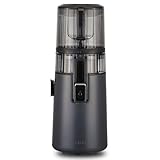
Hurom H70
Versatile
|
Vertical auger | Self-feeding hopper | Everyday mixed produce | Vertical format for mixed produce | Check Price |

Nama J3
Compact
|
Vertical auger | Self-feeding hopper | Smaller kitchens | Compact footprint; smaller setup | Check Price |
All ten juicers are now included in the comparison table above. Use the individual product reviews below for more detail on each model’s strengths, limitations, and ideal use case.
Best Juicers for Leafy Greens Reviews
1. Best Overall – Nama J2 Cold Press Juicer
01
The best all-around choice for people who make green juice often. Its self-feeding hopper lets you load a recipe together instead of feeding every handful of greens separately.
The best all-around choice for people who make green juice often. Its self-feeding hopper lets you load a recipe together instead of feeding every handful of greens separately.
The Nama J2 earns the overall spot because its self-feeding hopper addresses one of the biggest frustrations with juicing greens: repeatedly stopping to push small handfuls through a narrow chute. You can load a combination of washed kale, spinach, cucumber, celery, and apple into the hopper, then let the vertical auger draw ingredients into the juicing chamber.
That makes it especially appealing for regular household recipes where greens are only one part of the blend. Compared with a traditional horizontal Omega, the J2 places more emphasis on convenience and batch preparation than on hands-on control.
The hopper is a convenience feature, not permission to overfill the machine or ignore preparation. Long celery strings and tough stems can still interfere with smooth feeding, so cut fibrous ingredients as the manual directs and alternate leafy portions with firmer, juicier produce.
Expect to wash the hopper, auger, chamber, and pulp areas after use; a self-feeding design does not make cleanup automatic. Its premium price and substantial footprint are the main reasons not to choose it. If you juice several times a week and value a smoother routine, the convenience may justify the cost; for occasional single glasses, a less expensive horizontal model is easier to justify.
- Self-feeding hopper reduces hands-on feeding
- Versatile for mixed fruit and vegetable recipes
- Convenient for regular household batches
- Premium purchase price
- Large hopper and body need counter space
- Still requires disassembly and washing after use
2. Best Twin-Gear – Tribest Greenstar Elite GSE-5000
02
A specialist twin-gear juicer for buyers who put fibrous greens and wheatgrass ahead of quick setup and cleanup.
A specialist twin-gear juicer for buyers who put fibrous greens and wheatgrass ahead of quick setup and cleanup.
The Greenstar Elite is the most specialist machine in this selection. Instead of one auger, it uses two interlocking gears to crush and press produce, a format that appeals to people who regularly process fibrous greens, herbs, sprouts, and wheatgrass. The product listing also identifies automatic pulp ejection and food-preparation functions, giving it a broader role than a basic juice-only appliance.
For a buyer whose routine is built around green ingredients rather than occasional fruit juice, that dedicated twin-gear approach is its defining attraction. It is a different proposition from the Nama J2: less about loading a hopper and walking away, more about a purpose-built extraction system.
The tradeoff is ownership effort. Twin gears and their surrounding parts take more attention to assemble, disassemble, and clean than a simple everyday appliance, and the machine’s premium price makes sense only if you will use its specialist capabilities.
It is not automatically the best choice for every leafy-green drink: a household making mostly spinach, cucumber, and apple juice may find a single-auger model more practical. Before buying, check the included accessories, current model configuration, replacement-part availability, and warranty terms for your country. Choose the Greenstar Elite when twin-gear extraction is a deliberate priority—not simply because more gears sound more powerful.
Before buying, check the included accessories, current model configuration, replacement-part availability, and warranty terms for your country. Choose the Greenstar Elite when twin-gear extraction is a deliberate priority—not simply because more gears sound more powerful.
- Twin-gear extraction design
- Listing specifically identifies wheatgrass and sprouts
- Automatic pulp ejection for continuous juicing
- Very expensive listing compared with most home juicers
- More involved assembly and cleanup
- Less convenient for quick everyday batches
3. Best Horizontal Omega – Omega NC1000HDS Nutrition System
 03
A horizontal Omega option marketed for extracting juice from leafy greens and wheatgrass, with a long stated parts-and-performance coverage period.
A horizontal Omega option marketed for extracting juice from leafy greens and wheatgrass, with a long stated parts-and-performance coverage period.
The Omega NC1000HDS suits shoppers who want a conventional horizontal masticating juicer with leafy greens and wheatgrass explicitly featured in the product positioning. Its single-auger layout gives the user direct control over the pace at which ingredients enter the chamber.
That can be useful when processing delicate leaves alongside tougher stems: feed a small amount, let the auger work, and follow with cucumber or another ingredient that helps move the mixture through. The listing advertises 15-year coverage on parts and performance, a potentially important ownership consideration for a machine intended for regular use.
The listing advertises 15-year coverage on parts and performance, a potentially important ownership consideration for a machine intended for regular use.
The downside is that the controlled workflow is also a slower one. You must prepare ingredients and feed them in stages, so this Omega is less convenient than the self-feeding Nama J2 or Kuvings AUTO10 when making several servings. Its horizontal body also needs counter or cupboard space, and a long advertised warranty should never be assumed to apply worldwide.
Confirm the exact warranty exclusions, seller authorization, and local service arrangements before ordering—particularly if buying from an overseas marketplace. This is a sensible pick for buyers who prefer a traditional horizontal format and are comfortable trading automation for manual control.
- Horizontal masticating format
- Product listing calls out leafy greens and wheatgrass
- Long stated parts-and-performance coverage
- Manual feeding takes more attention
- Narrower chute means more preparation
- Warranty coverage should be confirmed for your region
4. Best for Celery – Omega Celery Juicer and Nutrition System
04
A celery-focused Omega slow juicer with an adjustable dial and an extraction system listed at 80 RPM.
A celery-focused Omega slow juicer with an adjustable dial and an extraction system listed at 80 RPM.
This Omega is the most targeted choice for shoppers whose main routine is celery juice. The product listing describes a celery-oriented extraction design, an adjustable dial, and operation at 80 RPM. Those details make it more relevant to celery-focused buyers than a general-purpose vertical juicer selected only for its large hopper.
A horizontal machine also lets you introduce stalks gradually, which is useful because celery contains long strings that can collect around an auger or in the pulp outlet if fed too quickly. It can still be used as part of a broader vegetable-juice routine, but celery is the reason to shortlist it.
That specialization is also its limitation. If your usual glass contains kale, spinach, cucumber, apple, and a little celery, the Nama J2 or Hurom H70 may be a more flexible everyday purchase. You will still need to trim and feed celery in manageable portions, clean the pulp path, and follow the manufacturer’s instructions rather than expecting the machine to handle whole bundles without attention.
One listing detail deserves particular care: the Amazon title surfaced for this product does not clearly establish the MM900HDS model number. Verify the model plate, included parts, voltage, and warranty before checkout so you know exactly which Omega version is being sold.
- Designed with celery extraction in mind
- Adjustable pressure dial
- Slow 80-RPM operation stated in the listing
- More specialized than an all-purpose vertical juicer
- Manual feeding and produce preparation required
- Confirm exact model number on the retailer listing
5. Best Everyday Horizontal – Omega J8006 Nutrition Center
 05
A long-running horizontal Omega design with dual-stage extraction and additional food-preparation uses.
A long-running horizontal Omega design with dual-stage extraction and additional food-preparation uses.
The J8006 is a familiar horizontal Omega option for buyers who prefer a straightforward, hands-on masticating juicer over a large self-feeding hopper. Its listing describes an 80-RPM dual-stage system and automatic pulp ejection. In practical terms, its appeal is the traditional workflow: prepare the produce, feed it steadily, and let the auger process greens with other fruits and vegetables.
It is a more versatile kitchen appliance than a greens-only specialist, and the listing also promotes additional food-preparation uses. That makes it worth considering for someone who wants one horizontal machine for a mix of juicing and related kitchen tasks.
The J8006 is not the convenience leader in this roundup. Its chute calls for more preparation and manual feeding than the Nama J2, Kuvings AUTO10, or Hurom vertical models, and it is an older-style design rather than a newer self-feeding system. Most importantly, the specific US listing identifies a 110-volt version.
Buyers in Morocco, Australia, the UK, or elsewhere should not assume that a plug adapter makes it compatible: check the appliance’s input-voltage label and obtain a correctly rated regional model where possible. If you want the horizontal Omega experience and have confirmed electrical compatibility, it remains a practical everyday option; if you want effortless loading, choose a hopper-style model.
- Dual-stage horizontal extraction design
- Automatic pulp ejection
- Versatile beyond simple juice recipes
- Manual feeding and chopping take time
- Older, less hands-free workflow
- The surfaced US listing specifies 110V; check voltage carefully
6. Best for Large Batches – Kuvings AUTO10 Cold Press Juicer
06
A large-capacity, self-feeding vertical juicer for households preparing several servings in one session.
A large-capacity, self-feeding vertical juicer for households preparing several servings in one session.
The Kuvings AUTO10 is designed around volume and convenience. Its Amazon listing identifies a 100-ounce capacity, a self-feeding hopper, and a 50-RPM slow-press system. Those features make it a strong candidate for households preparing several servings in one session, or for people who like to make a larger batch rather than juice one glass at a time.
The wide-capacity approach reduces the repeated loading associated with narrow-chute juicers and gives the AUTO10 a clear distinction from smaller vertical models. If your priority is making green juice for more than one person, its batch-oriented design is the main reason to consider it.
Large capacity does not mean zero preparation. Leafy greens can compress into a dense mass, while celery and other fibrous produce can leave long strands; cut ingredients to the lengths recommended in the manual and alternate leaves with firmer produce if feeding slows.
You also need room for the machine itself, its hopper, juice container, and cleaning parts, so measure both counter and storage space before ordering. The AUTO10 is a premium, relatively bulky appliance and may be excessive for someone who usually makes a single serving.
There is also a significant regional caveat: the surfaced US listing says warranty coverage and replacement parts are limited to the United States and Canada. International buyers should confirm support before paying.
- Large 100-ounce capacity listed
- Self-feeding workflow reduces repeated loading
- Designed for larger household batches
- Large countertop footprint
- Premium price
- Still needs ingredient preparation and cleaning
7. Best for Easier Cleaning – Hurom H400 Easy Clean Slow Juicer
 07
A premium vertical slow juicer designed around self-feeding operation and a simplified cleaning arrangement.
A premium vertical slow juicer designed around self-feeding operation and a simplified cleaning arrangement.
The Hurom H400 is aimed at buyers who want to reduce the cleanup friction that can make a juicer stay unused in a cupboard. Its listing highlights a self-feeding hopper and an easy-clean chamber built around a two-part auger arrangement rather than a conventional fine mesh screen.
The phrase easy-clean should be understood as easier by design, not maintenance-free. Pulp can still collect around the auger, chamber, and outlets, and removable parts need prompt rinsing before leafy fibers dry. The H400 is also a premium appliance with a larger footprint than a compact horizontal juicer, so it is best suited to people who will use it often enough to appreciate the convenience.
If your priority is the lowest purchase price, the Ninja NeverClog is a more accessible alternative. If you regularly juice and dislike mesh-screen scrubbing, the H400’s simplified chamber may be worth paying extra for—provided the model and local warranty support are confirmed.
- Self-feeding hopper
- Simplified strainer-free cleaning design
- Suitable for mixed produce recipes
- Premium price
- Removable parts still need washing
- Large appliance for smaller counters
8. Best Budget – Ninja NeverClog Cold Press Juicer JC151
08
A more accessible horizontal cold press juicer with two pulp filters and dishwasher-safe removable parts.
A more accessible horizontal cold press juicer with two pulp filters and dishwasher-safe removable parts.
The Ninja NeverClog JC151 is the accessible entry point for shoppers who want a slow juicer without committing to the price of a premium Nama, Kuvings, or Hurom machine. Its listing describes a 150-watt high-torque auger, two interchangeable pulp filters, and dishwasher-safe removable parts.
The two filters give you a choice of pulp levels, which is useful if household members prefer different juice textures. Its horizontal layout is familiar and relatively straightforward, and the listing markets it for common produce such as celery, carrots, apples, and leafy greens.
For a first slow juicer, it covers the basics without the complexity or cost of a twin-gear system.
The lower price comes with a more manual routine. You need to prepare and feed ingredients in manageable portions, and the JC151 is not the specialist pick for regular wheatgrass juicing or very large batches. To help leafy greens process consistently, alternate them with cucumber or another firmer ingredient and avoid pushing a large wad of leaves into the chute at once.
Dishwasher-safe parts can simplify cleanup, but check the manual for which components are approved and rinse pulp away promptly. Choose the Ninja when budget, uncomplicated operation, and easier parts cleaning matter most; step up to a self-feeding model if you make large quantities or want less hands-on loading.
- Lower entry price than premium models
- Two pulp filters for different juice textures
- Dishwasher-safe removable parts
- Manual feeding
- Not a dedicated wheatgrass specialist
- Smaller batch workflow than large-hopper models
9. Best Versatile Option – Hurom H70 Cold Press Juicer
 09
A self-feeding vertical slow juicer with a strainer-free chamber designed to make routine cleanup easier.
A self-feeding vertical slow juicer with a strainer-free chamber designed to make routine cleanup easier.
The Hurom H70 is a good fit for people who want a versatile vertical slow juicer with a more convenient loading routine. Its listing highlights a self-feeding hopper and a strainer-free easy-clean chamber, combining two features that are attractive for frequent home use.
The vertical format is suited to mixed recipes rather than only one ingredient: leafy greens can be paired with cucumber, celery, apples, and other produce to make a balanced juice. Compared with a traditional horizontal Omega, the H70 places more emphasis on loading convenience and a simplified cleaning arrangement.
It is a sensible middle ground for households that want one appliance for a variety of juices.
It is not the most specialized machine for wheatgrass or the most budget-friendly option. As with other vertical auger juicers, lightweight leaves may bunch together if you feed too much at once, so alternate greens with firmer ingredients and follow the manual’s guidance for long celery fibers.
A strainer-free chamber can reduce one cleaning chore, but it does not remove the need to rinse the auger, chamber, and pulp outlet. The H70 is most compelling if you value a vertical self-feeding design and make different fruit-and-vegetable recipes throughout the week.
If wheatgrass is your main ingredient, compare the Tribest Greenstar Elite and horizontal Omega models instead.
- Self-feeding hopper
- Strainer-free cleaning arrangement
- Versatile for mixed fruit and vegetable recipes
- Premium price
- Not a dedicated wheatgrass specialist
- Still requires careful feeding of long fibrous greens
10. Best Compact Option – Nama J3 Compact Cold Press Juicer
 10
A smaller Nama slow juicer for people who want a premium machine but have less counter space.
A smaller Nama slow juicer for people who want a premium machine but have less counter space.
The Nama J3 is the compact-minded option for buyers attracted to Nama’s self-feeding approach but who do not need the larger setup of the J2. Its smaller footprint is the central reason to consider it: it is easier to accommodate in a kitchen where counter space and cupboard storage are limited.
The self-feeding format also means it retains the convenience that distinguishes hopper-style vertical juicers from traditional manually fed horizontal machines. For a one- or two-person household making modest quantities of juice, that combination can be more useful than paying for a much larger batch-oriented model.
Compact does involve compromises. The J3 is not the natural choice for families preparing a large jug at once, and smaller capacity can mean more frequent loading if you are making juice for several people. It is still a premium appliance, so compare its current price with the J2 rather than assuming a smaller machine will be a bargain.
Ingredient preparation and cleanup remain part of ownership, especially when processing fibrous celery or leafy greens. Choose the J3 when footprint is the deciding factor; choose the J2 if you have room and want a more batch-friendly routine. Before ordering, confirm the exact model, included accessories, voltage, and warranty for your market.
- Smaller footprint than many full-size slow juicers
- Self-feeding design
- Suitable for everyday fruit and vegetable juice
- Smaller capacity than large-hopper models
- Premium price for a compact machine
- Less convenient for large batches
Which Type of Juicer Is Best for Leafy Greens?
A slow masticating juicer is usually the best starting point when leafy greens are a regular part of your routine. Instead of relying on a fast-spinning blade and basket, it uses an auger or gears to crush and press produce. That design generally handles leaves and fibrous ingredients more consistently than a conventional centrifugal juicer.
Horizontal single-auger juicers are a good fit for people who want controlled feeding and regularly process wheatgrass, herbs, or fibrous vegetables. Omega’s horizontal models are examples.
Vertical single-auger juicers are often easier to use for mixed fruit-and-vegetable recipes. Self-feeding hoppers on models such as the Nama J2 and Kuvings AUTO10 reduce the need to feed ingredients one handful at a time.
Twin-gear juicers use two interlocking gears to crush and press produce. They appeal to dedicated juicing enthusiasts, but usually involve more assembly, cleaning, and expense. The Tribest Greenstar Elite is the specialist example in this guide.
A centrifugal juicer is faster and can be useful for firm fruits and vegetables, but it is not our first choice if kale, spinach, parsley, or wheatgrass will be your main ingredients.
Masticating vs. Centrifugal Juicers
| Feature | Masticating / Cold Press | Centrifugal | |—|—|—| | Extraction | Crushes and presses produce | Spins produce against a cutting basket | | Leafy greens | Usually the stronger choice | Can be less consistent with light leaves | | Wheatgrass | Suitable models are available | Generally not the right tool | | Speed | Slower | Faster | | Foam | Often less foam | Often more foam | | Feeding | May need gradual feeding | Often has a wider chute | | Cleaning | Screens, augers, and chambers vary | Basket and pulp areas need cleaning |
For frequent green juice, a masticating machine is usually the better fit. For occasional juice made mostly from apples, oranges, or firm produce, the faster workflow of a centrifugal juicer may matter more. Neither design guarantees a particular nutrient level or juice yield; results depend on the machine, ingredients, and technique.
How to Choose the Best Juicer for Leafy Greens
Seven Things to Check Before You Buy
-
Extraction design
Choose a slow auger or twin-gear system if leafy greens and wheatgrass are central to your routine.
Look forA masticating design with clear guidance for leafy greens and fibrous produce.AvoidA centrifugal model chosen solely for its wide chute or high wattage. -
Feeding convenience
A self-feeding hopper reduces repeated loading, while horizontal models give you more manual control.
Look forA chute or hopper sized for the quantities you actually prepare.AvoidAssuming a wide opening means leaves and long fibers never need preparation. -
Celery and long fibers
Celery strings can wrap around an auger or collect in the chamber if fed too quickly.
Look forManufacturer instructions for celery and fibrous vegetables, plus a reverse function where provided.AvoidLoading long uncut stalks in large bundles. -
Cleaning routine
Check whether the juicer uses a mesh screen, strainer-free chamber, or dishwasher-safe removable parts.
Look forEasy access to pulp outlets and clearly stated cleaning instructions.AvoidAssuming easy-clean means no parts need rinsing. -
Batch size and footprint
Large hoppers and juice containers suit families but occupy more counter and storage space.
Look forCapacity that matches your normal number of servings.AvoidPaying for a large machine if you usually make one glass. -
Warranty and replacement parts
Warranty coverage, screens, augers, and seals affect long-term ownership.
Look forLocal warranty support and available replacement parts.AvoidAssuming a US warranty applies in another country. -
Voltage and regional support
Imported juicers may use a different voltage or plug standard.
Look forA model designed for your country's electrical supply and a local service route.AvoidUsing a plug adapter to solve a voltage mismatch.
Best Juicers for Leafy Greens in Australia
Australian shoppers can use the same buying criteria, but should check local model names, warranty support, voltage, and replacement-part availability before ordering. The Amazon product cards in this guide reflect US listings, not a guarantee that the same configuration is sold in Australia.
The models worth comparing include the Nama J2 for hands-free mixed juicing, the Tribest Greenstar Elite for twin-gear extraction, Omega horizontal juicers for controlled feeding, and Hurom’s H400 or H70 for a simplified vertical-juicer workflow. Check the Australian manufacturer’s or authorized retailer’s listing for the exact model and included accessories.
How to Get More Juice From Leafy Greens
Good technique helps a slow juicer process leafy ingredients more consistently. It also reduces the chance of packing the chamber with a dense wad of leaves.
- Alternate leaves with firmer produce. Feed kale or spinach with cucumber, celery, or apple rather than loading a large bundle of leaves at once.
- Cut long fibers shorter. Chop celery stalks and very long stems into manageable lengths, following the juicer’s manual.
- Feed gradually. Give the auger time to grip and process each portion. Avoid forcing ingredients into the chute.
- Remove unusually tough stems when needed. Thick stalks can be harder to process than tender leaves.
- Use reverse only as directed. If ingredients become stuck, stop and follow the manufacturer’s instructions for the reverse function.
- Rinse parts promptly. Leafy fibers are easier to remove before they dry on a screen, auger, or pulp outlet.
For a more practical routine, wash and dry greens before juicing, prepare only the amount you can use, and refrigerate fresh juice promptly in a sealed container. For food-safety and storage guidance, see our related article on how long fresh juice lasts.
Frequently Asked Questions
Common Questions About Juicing Leafy Greens
What is the best juicer for leafy greens?
The Nama J2 is our best overall pick for most households because its self-feeding hopper makes mixed green-juice recipes convenient. The Tribest Greenstar Elite is a specialist alternative for people who prioritize twin-gear extraction and regularly juice wheatgrass.
What is the best masticating juicer for leafy greens?
For everyday use, consider the Nama J2. For a horizontal design, look at Omega’s NC1000HDS or J8006. For twin-gear extraction, the Tribest Greenstar Elite is the specialist option.
Are cold press juicers better for leafy greens?
Usually, yes. Slow auger and twin-gear machines are generally better suited to processing lightweight, fibrous leaves than conventional centrifugal juicers. Actual yield varies with the machine, produce, and feeding technique.
Is a masticating juicer the same as a cold press juicer?
The terms are often used interchangeably in home juicer listings. Masticating describes a crushing-and-pressing extraction method, while cold press is a common label for slow mechanical juicing.
What is the best juicer for leafy greens and hard vegetables?
The Nama J2 is our leading all-around option for mixed recipes with leafy greens, apples, cucumber, and firmer vegetables. The Kuvings AUTO10 is worth considering for larger batches.
What is the best juicer for leafy greens and celery?
Omega’s celery-focused juicer is the most specialized option in this roundup. The Nama J2 is a more versatile choice if you also make mixed fruit and vegetable juice.
What is the best juicer for wheatgrass and leafy greens?
The Tribest Greenstar Elite and Omega horizontal juicers are the most relevant designs to compare. Check the exact model’s manual and product details for wheatgrass compatibility.
Can you put spinach and kale in a regular juicer?
Yes, but a centrifugal juicer may process lightweight leaves less consistently. If leafy greens are a frequent ingredient, a suitable masticating juicer is usually the better choice.
Are twin-gear juicers better than single-auger juicers?
Not for everyone. Twin-gear models are aimed at enthusiasts who prioritize specialized extraction, while single-auger juicers are generally simpler and more convenient for everyday household use.
Is a cold press juicer worth the money?
It can be worthwhile if you regularly make vegetable and green juice. If you mostly juice oranges or apples occasionally, a less expensive centrifugal model may be sufficient.
Final Verdict: Which Juicer Should You Buy?
Choose the Juicer That Matches Your Routine
- Nama J2: the best all-around choice for convenient mixed green juice.
- Tribest Greenstar Elite: the specialist twin-gear option for committed greens and wheatgrass enthusiasts.
- Omega celery juicer: the most targeted choice for regular celery juice.
- Ninja NeverClog: the budget-conscious entry into slow juicing.
- Kuvings AUTO10: the large-batch option for families.
For most households, the Nama J2 is the strongest starting point because its self-feeding hopper makes regular green-juice preparation easier. If you are more focused on wheatgrass and fibrous greens than convenience, compare the Tribest and horizontal Omega designs. Before ordering, verify the exact model, voltage, regional warranty, and current retailer listing.