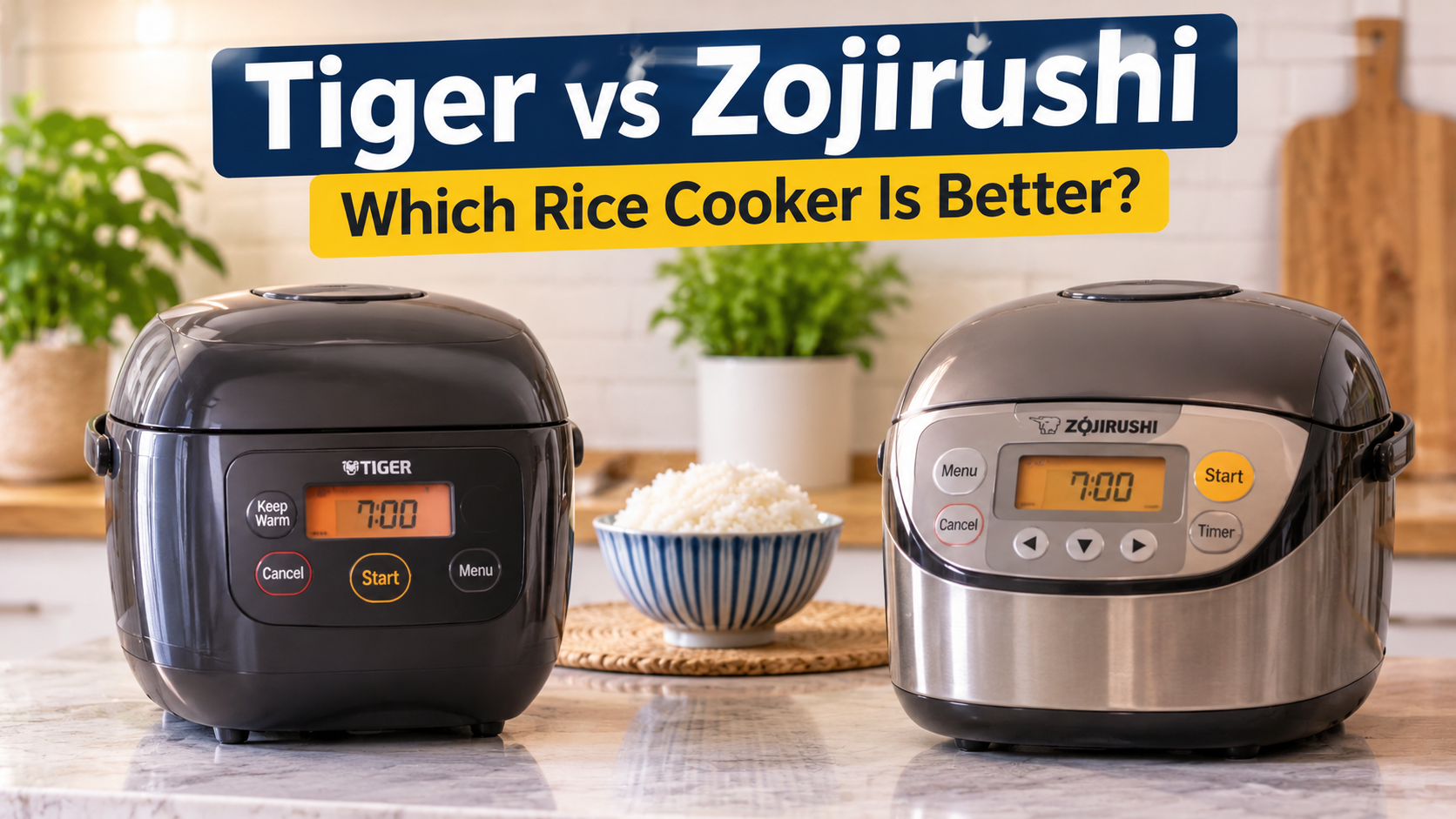
If you’re comparing a Tiger vs Zojirushi rice cooker, you’re already looking at two of the most established Japanese rice cooker brands.
Both make excellent rice cookers. Both offer computerized cooking, multiple rice programs, keep-warm functions, and models ranging from relatively simple cookers to sophisticated induction-heating machines.
So which one should you buy?
The short answer is this:
Zojirushi is the better choice for rice-focused cooking, texture control, advanced rice technology, and premium performance. Tiger is the better choice for value, versatility, speed on selected models, and features such as Tacook synchronized cooking.
But there’s an important catch.
Comparing the brands alone doesn’t tell you enough. A basic Tiger and a premium Zojirushi can be very different machines. The better comparison is between models at similar technology and price levels.
For most shoppers, the real question isn’t “Is Tiger better than Zojirushi?”
It’s:
“Which Tiger or Zojirushi rice cooker is better for the way I actually cook?”
Which Tiger or Zojirushi should you buy?


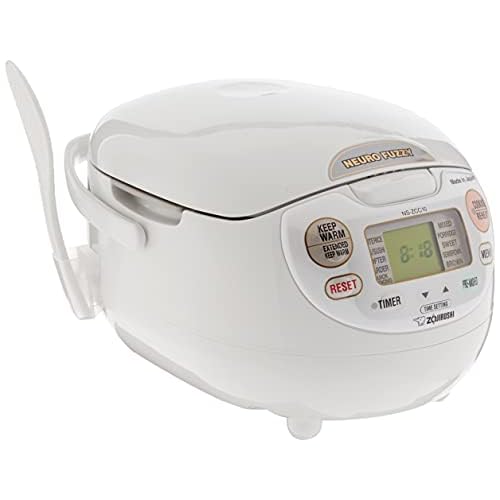

Editorial note: This is a specification-based comparison of the four named models, using manufacturer-published information. It is not a controlled side-by-side cooking test, and results can vary with rice type, water ratio and personal texture preference.
Tiger vs Zojirushi Rice Cooker Comparison
Four 5.5-cup models compared
|
Best value Micom
Tiger JBV-A10U
|
VS |
Best Tiger IH
Tiger JKT-D10U
|
|---|---|---|
|
Micom
|
Heating system |
IH
|
|
Tacook + value
|
Main strength |
Fast small-batch cooking
|
|
672W
|
Power |
1,080W
|
|
Up to 12 hours
|
Keep warm |
Up to 24 hours
|
|
China
|
Country of manufacture |
Japan
|
| Check price on Amazon | Check price on Amazon |
Tiger vs Zojirushi: What’s the Real Difference?
At first glance, Tiger and Zojirushi rice cookers can look remarkably similar.
Both brands offer computerized cooking. Both have models designed for different rice varieties. Both offer keep-warm functions, and both have models with induction heating.
The difference becomes clearer when you look at what each brand emphasizes.
Tiger: Versatility and Practical Features
Tiger tends to put more emphasis on making the rice cooker useful beyond basic rice preparation.
The Tiger JBV-A10U, for example, combines Micom cooking with Tacook synchronized cooking. Its four menu settings are Plain Rice, Brown Rice, Slow Cooking and Synchro-Cooking.
The Tiger JKT-D10U moves into IH heating and adds features including GABA Brown, Long-grain, Premium and Express-Limited Cups.
That makes Tiger particularly interesting if you don’t want your rice cooker to be a one-purpose appliance.
Zojirushi: Rice-Focused Control
Zojirushi puts more emphasis on controlling the rice itself.
The NS-ZCC10 uses Neuro Fuzzy technology and provides settings for different white-rice textures, including Regular/Sushi, Softer and Harder.
Higher-end models such as the NW-QAC10 move into IH heating and offer additional specialized rice programs.
At the premium end, Zojirushi also offers pressure-induction technology.
In short, the selected Tiger models make their strongest case through practical versatility and value, while the selected Zojirushi models stand out for rice-specific controls and specialty programs. That is a comparison of these models, not a rule that applies to every cooker from either brand.
Micom vs Neuro Fuzzy: Which Technology Is Better?
Technology names can make rice cookers sound more complicated than they really are.
What Is Micom?
Micom stands for microcomputer-controlled cooking.
Instead of simply running a heating element for a fixed amount of time, a computerized rice cooker uses sensors and programmed logic to manage the cooking process.
The Tiger JBV-A10U is an example of this approach.
It combines computerized cooking with multiple programs designed for different foods and cooking situations.
What Is Neuro Fuzzy?
Zojirushi’s NS-ZCC10 uses Neuro Fuzzy technology.
The system is designed to automatically adjust cooking temperature and timing according to cooking conditions.
The major difference isn’t that one system produces good rice and the other doesn’t. Both can produce excellent everyday rice. The bigger difference is the amount of rice-specific control available.
Winner for advanced rice control: Zojirushi
Winner for versatility and value: Tiger
What Does IH Add?
IH stands for induction heating. Instead of relying only on a conventional heating element underneath the cooking pot, an IH system generates heat through electromagnetic energy.
The result is a more sophisticated heating system that can respond more precisely to temperature changes.
Tiger’s JKT-D10U is an IH model with computerized cooking logic, a three-layer ceramic-coated inner pot, multiple programs and up to 24-hour keep warm.
Zojirushi also offers IH models, including the NW-QAC10. This makes the comparison much closer.
A Tiger IH rice cooker isn’t simply a cheaper alternative to a Zojirushi. The JKT-D10U is itself an advanced IH machine with specialized cooking programs.
If you’re comparing Tiger and Zojirushi at the IH level, the differences become much more about features and cooking preferences than basic heating technology.
What About Pressure Induction?
This is where Zojirushi has its clearest technological advantage in the comparison.
Premium Zojirushi pressure-induction models combine pressure cooking, IH heating, computerized control and more sophisticated automatic cooking technology.
Models such as the NP-NWC10 therefore sit in a completely different class from an affordable Micom cooker such as the Tiger JBV-A10U.
But don’t make the mistake of assuming that more technology automatically means better value.
You don’t need a pressure-induction rice cooker to make excellent rice.
If you cook two or three cups of white rice a few times a week, a premium pressure-induction machine may offer more technology than you actually need.
If you cook rice almost every day and care deeply about texture and consistency, however, the extra technology can make considerably more sense.
Which Makes Better Rice: Tiger or Zojirushi?
This is the question most shoppers ultimately care about.
The honest answer is:
Both can make excellent rice.
Zojirushi gets the advantage when your priority is maximum rice-focused control.
A Tiger JBV-A10U can produce very good everyday rice without requiring you to move into a premium price category.
Move up to the Tiger JKT-D10U, however, and the gap becomes considerably smaller because you’re getting IH heating, computerized cooking and specialized rice programs.
Zojirushi’s advantage becomes more noticeable when you want to fine-tune texture or use specialized rice settings.
Rice-cooking performance by rice type
| Rice characteristic | Tiger | Zojirushi | Advantage |
|---|---|---|---|
| Everyday white rice | Excellent | Excellent | Tie |
| Japanese short-grain | Excellent | Excellent | Tie |
| Sushi rice | Very good–excellent | Excellent | Zojirushi |
| Jasmine rice | Excellent on compatible models | Excellent on compatible models | Tie |
| Brown rice | Very good–excellent | Excellent | Model dependent |
| Mixed grains | Very good | Excellent | Zojirushi |
| Texture adjustment | Model dependent | Strong on selected models | Zojirushi |
| Small-batch speed | Excellent on selected models | Good | Tiger |
These are broad brand-level tendencies, not guarantees for every model. Jasmine, brown-rice and texture features vary by model, so check the exact cooker’s published menu list.
Tiger vs Zojirushi for White Rice
White rice is where you are least likely to regret choosing either brand.
The Tiger JBV-A10U provides Micom-controlled white-rice cooking, while the Zojirushi NS-ZCC10 adds more explicit white-rice texture choices.
The JKT-D10U adds IH heating and additional rice programs.
Zojirushi’s NS-ZCC10 takes a more rice-focused approach by allowing you to select different white-rice textures.
Its settings include:
- Regular/Sushi
- Softer
- Harder
That can be useful if different people in your household prefer different textures.
Someone might prefer softer rice with dinner, while another person may prefer firmer grains for fried rice.
White Rice Verdict
Choose Tiger if you want excellent rice plus more general cooking versatility.
Choose Zojirushi if your priority is controlling the texture of the rice itself.
Winner: Zojirushi
The difference, however, isn’t large enough to make a premium Zojirushi necessary for every household.
Tiger vs Zojirushi for Sushi Rice
Sushi rice requires more attention to texture than ordinary white rice.
Zojirushi has a strong advantage here because models such as the NS-ZCC10 provide a dedicated Sushi setting, while advanced models provide additional rice-focused controls.
Tiger also supports Japanese-style rice cooking on compatible models, so a good Tiger can absolutely handle sushi rice.
But if sushi is something you make regularly and you want dedicated controls for it, Zojirushi is the safer choice.
Winner: Zojirushi
For occasional sushi preparation, however, you don’t necessarily need to spend more simply because the cooker carries the Zojirushi name.
Tiger vs Zojirushi for Brown Rice
Brown rice is more demanding than white rice because the outer bran layer makes it harder for water and heat to penetrate the grain.
Both brands offer dedicated brown-rice programs.
The Tiger JKT-D10U includes GABA Brown, while the Zojirushi NW-QAC10 also provides Brown Rice and GABA Brown programs.
That makes this one of the categories where it is difficult to declare an overall brand winner.
Brown Rice Verdict
Tie — compare the exact models.
When comparing two specific cookers, look at:
- Brown Rice program
- GABA Brown
- Cooking time
- Capacity
- Keep-warm features
- Price
The model matters more than the logo.
Tiger vs Zojirushi for Jasmine and Long-Grain Rice
This is another category where model selection matters.
Japanese rice cookers are often designed with short-grain rice in mind, but several models from both brands support longer-grain varieties.
The Tiger JKT-D10U includes a Long-grain program.
The Zojirushi NW-QAC10 includes a dedicated Jasmine program.
So if you regularly switch between Japanese short-grain rice, jasmine rice and other long-grain varieties, don’t choose based on brand reputation alone. Check the exact cooking programs.
Winner: Tie
For households that cook several types of rice, the individual model’s program menu matters more than whether the cooker says Tiger or Zojirushi.
Which Rice Cooker Is Faster?
Tiger has the advantage for speed, particularly for small quantities on selected models.
But you shouldn’t interpret that as meaning every Tiger cooks faster than every Zojirushi.
Cooking time depends on:
- Amount of rice
- Rice variety
- Water temperature
- Cooking program
- Heating technology
- Soaking
- Cooking algorithm
- Capacity
The Tiger JKT-D10U has a particularly interesting feature called Express-Limited Cups. The 5.5-cup model can cook a limited quantity of white rice in as little as 17 minutes. That does not mean a full pot of rice cooks in 17 minutes. It is a specialized limited-quantity program.
Zojirushi isn’t necessarily slow, either. The NW-QAC10 provides a Quick program, while some standard programs take longer because the cooker is performing a more controlled cooking process.
Speed Verdict
If your priority is:
“I need a small amount of white rice quickly.”
Choose Tiger, especially the JKT-D10U.
If your priority is:
“I don’t mind waiting if I get the texture I want.”
Zojirushi becomes more attractive.
Keep-Warm Performance: Tiger vs Zojirushi
Keep warm is one of the most underrated rice cooker features. If you always eat rice immediately, it may not matter much. But if you cook rice in the morning and eat it later, or household members eat at different times, keep warm becomes considerably more important.
The Tiger JBV-A10U provides automatic keep warm for up to 12 hours.
The JKT-D10U extends that capability to up to 24 hours.
The Zojirushi NS-ZCC10 provides automatic keep warm, extended keep warm and a reheating cycle.
Keep-warm and reheating features across the four models
|
Best value Micom
Tiger JBV-A10U
|
VS |
Best Tiger IH
Tiger JKT-D10U
|
|---|---|---|
|
Yes
|
Automatic keep warm |
Yes
|
|
Up to 12 hours
|
Published keep-warm detail |
Up to 24 hours
|
|
Not listed
|
Reheating cycle |
Not listed
|
|
2 cooking timers
|
Delay timer |
2 timers
|
| Check price on Amazon | Check price on Amazon |
Longer keep warm doesn’t necessarily mean the rice will taste exactly the same after many hours.
Rice texture changes over time because of moisture movement, evaporation, condensation, the amount of rice remaining in the pot, how often the lid is opened and the type of rice.
Still, Zojirushi has an advantage if you regularly cook rice ahead of time.
Winner: Zojirushi
Reheating: A Feature Worth Paying Attention To
Zojirushi’s NS-ZCC10 includes a dedicated reheating cycle. That’s useful if you cook a batch of rice, keep it warm and later want to bring it back toward a better serving temperature. For meal prep, this can be more useful than an obscure cooking program that you rarely use.
Think about your routine. If it’s:
Cook → keep warm → reheat → serve
Zojirushi has a strong advantage.
If it’s:
Cook rice + another food simultaneously
Tiger becomes more attractive.
Tiger Tacook vs Zojirushi: Which Is More Versatile?
This is Tiger’s biggest differentiator. The Tacook system on compatible Tiger models allows another food to cook on a plate above the rice during the same cooking cycle. That means you can combine rice with suitable foods such as:
- Vegetables
- Fish
- Chicken
- Other appropriate ingredients
Tacook isn’t simply another rice program.
It changes what the appliance can do.
The Tiger JBV-A10U is particularly interesting because it combines Tacook synchronized cooking with Micom control and four menu settings: Plain Rice, Brown Rice, Slow Cooking and Synchro-Cooking. It does not have a separate steam-cooking menu.
Zojirushi has cooking and steaming capabilities on selected models, but it doesn’t have a direct equivalent to Tiger’s Tacook system.
Winner for meal versatility: Tiger
If you want your rice cooker to help prepare an entire meal, Tacook can be more valuable than additional rice-specific technology.
Inner Pot and Durability: Which Brand Lasts Longer?
This is an area where online comparisons often become too confident.
You may see claims that Tiger inner pots last only a few years while Zojirushi pots last a decade or more.
Those shouldn’t be treated as universal facts.
Both brands use different inner-pot constructions across their product ranges, and the lifespan of a nonstick coating depends heavily on how the cooker is used.
Factors include:
- Frequency of use
- Cleaning method
- Utensils
- Abrasive cleaners
- How rice is removed
- Whether the pot is dropped
- Replacement-pot availability
The Tiger JBV-A10U uses an aluminum inner pot with a fluorine coating. Tiger lists this US-market version as made in China; this is an important distinction when comparing it with other Tiger models.
The JKT-D10U uses a three-layer metal construction with ceramic coating.
The Zojirushi NS-ZCC10 uses a spherical nonstick cooking pan, while the NW-QAC10 uses a thick spherical nonstick pan.
Durability Verdict
At the brand level: Tie.
Rather than asking which company makes the longest-lasting inner pot, check the exact model’s construction and whether replacement inner pans are available.
How to Protect the Inner Pot
Regardless of which brand you choose, treat the inner pot like specialized nonstick cookware.
Avoid:
- Metal spoons
- Metal knives
- Abrasive scrubbers
- Harsh abrasive cleaners
- Aggressive scraping
- Leaving food residue sitting for long periods
Use the supplied rice paddle or another suitable nonmetal utensil.
The inner pot is one of the easiest parts of a rice cooker to damage through everyday misuse.
Which Rice Cooker Is Easier to Clean?
Both brands are relatively easy to maintain on the models being compared.
Typical cleaning involves the:
- Inner pot
- Inner lid
- Steam-related components
- Measuring cup
- Accessories
The Tiger JKT-D10U has a detachable inner lid and removable steam-related components designed to make cleaning easier.
The Zojirushi NS-ZCC10 also has a detachable inner lid.
Some Zojirushi models go further with additional cleaning features.
| Cleaning feature | Tiger | Zojirushi |
|---|---|---|
| Removable inner pot | Yes | Yes |
| Detachable inner lid | Selected models | Selected models |
| Removable steam components | Model dependent | Model dependent |
| Nonstick care required | Yes | Yes |
| Hand cleaning | Yes | Yes |
| Overall cleaning | Easy | Easy |
Winner: Zojirushi, narrowly
But this isn’t an important enough difference to choose the brand by itself.
The exact model matters more.
Cooking Programs: Tiger vs Zojirushi
Simply counting the number of buttons doesn’t tell the whole story.
Tiger’s JBV-A10U has four computerized menu settings: Plain Rice, Brown Rice, Slow Cooking and Synchro-Cooking. The Tacook cooking plate lets you prepare a suitable side dish during the rice cycle, but that is not the same as having a dedicated steam-cooking menu.
The JKT-D10U adds programs such as GABA Brown, Long-grain, Premium and Express-Limited Cups.
The NS-ZCC10 emphasizes rice-specific settings such as Regular/Sushi, Softer, Harder, Brown, Semi-Brown, Rinse-Free and Quick.
The NW-QAC10 adds programs including Jasmine, Sushi and GABA Brown.
Specialty cooking programs: Tiger vs Zojirushi
|
Best value Micom
Tiger JBV-A10U
|
VS |
Best Tiger IH
Tiger JKT-D10U
|
|---|---|---|
|
Yes
|
Tacook synchronized cooking |
No
|
|
No
|
GABA Brown |
Yes
|
|
No
|
Jasmine rice |
No
|
|
Not listed
|
Quinoa / steel-cut oatmeal |
Not listed
|
|
No
|
Express-Limited Cups |
Yes
|
| Check price on Amazon | Check price on Amazon |
Tiger’s advantage: broader general cooking functionality.
Zojirushi’s advantage: more rice-specific control.
Which Is Better for Meal Prep?
This depends on what your meal prep actually looks like.
Choose Tiger if your meal prep means:
Rice + another food at the same time
Tacook can make this genuinely useful.
Choose Zojirushi if your meal prep means:
Cook a large batch → keep warm → reheat later
Zojirushi’s keep-warm and reheating features become more valuable here.
| Meal-prep situation | Better choice |
|---|---|
| Rice + another dish | Tiger |
| Large batch of rice | Tie |
| Long keep warm | Zojirushi |
| Reheating | Zojirushi |
| Fast small portions | Tiger |
| Maximum rice-program flexibility | Zojirushi |
Tiger JBV-A10U vs Zojirushi NS-ZCC10
This is one of the most useful comparisons for shoppers who want computerized cooking without immediately moving into premium IH territory.
Both are 5.5-cup-class models, but their strengths are different.
Tiger JBV-A10U vs Zojirushi NS-ZCC10
|
Value Micom
Tiger JBV-A10U
|
VS |
Neuro Fuzzy
Zojirushi NS-ZCC10
|
|---|---|---|
|
Micom
|
Cooking system |
Neuro Fuzzy Micom
|
|
5.5 cups
|
Capacity |
5.5 cups
|
|
Standard white-rice menu
|
White-rice control |
Regular/Sushi, Softer, Harder
|
|
Yes
|
Tacook |
No
|
|
Tacook + 12-hour keep warm
|
Standout advantage |
Texture settings + reheating
|
| Check price on Amazon | Check price on Amazon |
Choose the Tiger JBV-A10U if you want:
- Better versatility
- Tacook
- Lower-cost computerized cooking
- One appliance that can do more than rice
Choose the Zojirushi NS-ZCC10 if you want:
- More rice-specific control
- Neuro Fuzzy
- Softer and Harder settings
- Extended keep warm
- Reheating
Winner for rice: Zojirushi NS-ZCC10
Winner for versatility: Tiger JBV-A10U
Tiger JKT-D10U vs Zojirushi NW-QAC10
This is the more serious comparison because both are IH rice cookers.
The Tiger JKT-D10U combines IH heating, 1-liter capacity, 1,080W power, a three-layer ceramic-coated inner pot, 12 computerized programs and up to 24-hour keep warm.
The Zojirushi NW-QAC10 is also a 5.5-cup IH model. It adds a broad menu that includes Jasmine and Quick Jasmine, GABA Brown, quinoa, steel-cut oatmeal and steam, plus a self-cleaning function.
Tiger JKT-D10U vs Zojirushi NW-QAC10
|
Fast small-batch cooking
Tiger JKT-D10U
|
VS |
Broader specialty menu
Zojirushi NW-QAC10
|
|---|---|---|
|
IH
|
Heating system |
IH
|
|
5.5 cups / 1,080W
|
Capacity / power |
5.5 cups / 1,080W
|
|
Express-Limited Cups
|
Standout rice menu |
Jasmine + Quick Jasmine
|
|
GABA Brown, Long-grain, slow cook
|
Other specialty functions |
GABA Brown, quinoa, oatmeal, steam
|
|
Fast small quantities + versatile programs
|
Best reason to choose |
Wide menu + self-cleaning and reheat
|
| Check price on Amazon | Check price on Amazon |
The verdict
Choose the Zojirushi NW-QAC10 if your priority is rice-focused cooking, specialized rice programs and texture control.
Choose the Tiger JKT-D10U if you value flexibility, speed, long-grain cooking and additional general cooking features.
This is a much closer competition than comparing a basic Tiger with a premium Zojirushi pressure-induction model.
Best Tiger Rice Cookers to Consider
You don’t need to compare every Tiger model to make a decision.
Tiger JBV-A10U — Best Value Micom Rice Cooker
The JBV-A10U is Tiger’s value-oriented 5.5-cup Micom option in this comparison. Its appeal is straightforward rice cooking plus Tacook, rather than a long list of specialty programs.
You get Micom cooking, Tacook synchronized cooking and four menu settings: Plain Rice, Brown Rice, Slow Cooking and Synchro-Cooking. It also has automatic keep warm for up to 12 hours.
It’s particularly well suited to:
- Budget-conscious shoppers
- Families
- Beginners
- Meal preparation
- People who want Tacook
- People who want more than basic rice cooking
Tiger JBV-A10U Micom Rice Cooker
A straightforward 5.5-cup Micom cooker with Tacook synchronized cooking.
Four menu settings—Plain Rice, Brown Rice, Slow Cooking and Synchro-Cooking—plus up to 12 hours of automatic keep warm. Tiger lists this US-market version as made in China. See Tiger’s official specifications.
Tiger JKT-D10U — Best Premium Tiger
The JKT-D10U is the model to consider when you want to move into IH.
Its combination of IH heating, 24-hour keep warm, GABA Brown, multiple programs and Express-Limited Cups makes it considerably more advanced than a basic Tiger Micom cooker.
It’s particularly suitable for:
- Frequent rice eaters
- IH cooking
- Fast small portions
- Brown rice
- Long-grain rice
- Versatile cooking
Best Tiger for IH: JKT-D10U
Tiger JKT-D10U Induction Heating Rice Cooker
IH heating, GABA Brown and fast limited-quantity cooking.
A 5.5-cup IH model with 12 cooking settings, up to 24-hour keep warm and an Express-Limited Cups program that can cook a limited amount of white rice in as little as 17 minutes. See Tiger’s official specifications for details.
Best Zojirushi Rice Cookers to Consider
Zojirushi NS-ZCC10 — Best Everyday Zojirushi
The NS-ZCC10 is a strong middle ground.
You get Neuro Fuzzy technology without jumping directly into a premium IH cooker.
Its strongest features include Regular/Sushi rice, Softer and Harder texture settings, Brown Rice, Porridge, Sweet Rice, Rinse-Free Rice, Quick Cooking, Automatic Keep Warm, Extended Keep Warm, Reheating and two delay timers.
It’s best suited to:
- Everyday rice
- White rice
- Sushi rice
- Texture control
- People who want Neuro Fuzzy
Best everyday Zojirushi: NS-ZCC10
Zojirushi NS-ZCC10 Neuro Fuzzy Rice Cooker
Neuro Fuzzy cooking with adjustable white-rice texture settings.
A 5.5-cup computerized cooker with Regular/Sushi, Softer and Harder settings, extended keep warm and a reheating cycle. See Zojirushi’s official specifications for the full program list.
Zojirushi NW-QAC10 — Best Feature-Rich IH Rice Cooker
The NW-QAC10 is the stronger choice when rice itself is the reason you’re spending more.
Its IH system, 1,080-watt rating, Jasmine and Quick Jasmine settings, GABA Brown, quinoa, steel-cut oatmeal and steam menu make it attractive to frequent rice eaters who also want more than standard white-rice cooking.
It’s particularly suitable for:
- Serious rice eaters
- Frequent cooking
- Different rice varieties
- IH cooking
- Texture control
- Premium rice preparation
Zojirushi NW-QAC10 Induction Heating Rice Cooker
A 5.5-cup IH cooker with an unusually broad specialty menu.
Includes Jasmine and Quick Jasmine, GABA Brown, quinoa, steel-cut oatmeal and steam settings, plus automatic/extended keep warm, reheating and self-cleaning. Rated 1,080W and made in Japan. See Zojirushi’s official specifications.
Tiger vs Zojirushi: Which Is Better Value?
This is where Tiger makes one of its strongest arguments.
You don’t necessarily have to spend premium money to get computerized cooking from Tiger. The JBV-A10U provides Micom cooking, four menu settings, Tacook and up to 12 hours of automatic keep warm.
The JKT-D10U gives you a path into IH without requiring you to move directly to the most expensive class of rice cooker.
Zojirushi’s value proposition becomes stronger when you specifically want its rice-focused technology.
The NS-ZCC10 gives you Neuro Fuzzy, texture control, extended keep warm and reheating.
The NW-QAC10 moves into more advanced IH cooking.
So don’t ask:
“Is Zojirushi worth more because it’s the better brand?”
Ask:
“Will I actually use the features I’m paying more for?”
If you cook a couple of cups of white rice once a week, you probably don’t need the most sophisticated rice cooker available.
If you cook rice almost every day and care deeply about texture, consistency and different varieties, spending more can make much more sense.
Winner for budget value: Tiger
Tiger vs Zojirushi: Reliability and Long-Term Value
This is another area where it’s important not to exaggerate.
You may find claims online that one brand lasts five years while another lasts 10 or 15 years. Those numbers shouldn’t be presented as guaranteed lifespans. There isn’t enough standardized long-term failure data to honestly declare Tiger or Zojirushi universally more durable.
Instead, look at:
- The exact model
- How frequently you use it
- How you treat the inner pot
- Replacement-part availability
- Maintenance of removable components
- Whether the features justify the initial purchase price
Reliability verdict: Tie
The model and how you use it matter more than the logo.
Tiger vs Zojirushi: Frequently Asked Questions
Is Tiger better than Zojirushi?
Neither brand is universally better. Tiger is compelling for value and cooking versatility, while Zojirushi has an edge for rice-focused controls on selected models. Compare cookers with similar capacity and heating technology.
Does the Tiger JBV-A10U include Tacook?
Yes. Tiger’s JBV-A10U includes a Tacook cooking plate that lets you prepare rice and a suitable side dish during the same cycle. Its four menu settings are Plain Rice, Brown Rice, Slow Cooking and Synchro-Cooking; it does not list a separate porridge menu.
Does the Zojirushi NS-ZCC10 have a reheating cycle?
Yes. Zojirushi lists automatic keep warm, extended keep warm and a reheating cycle among the NS-ZCC10’s features.
How fast is the Tiger JKT-D10U?
Its Express-Limited Cups setting can cook a limited quantity of white rice in as little as 17 minutes in the 5.5-cup model. That is not the cooking time for a full pot.
Does the Zojirushi NW-QAC10 cook jasmine rice?
Yes. The NW-QAC10 includes Jasmine and Quick Jasmine, white, quick white, mixed, sushi/sweet, congee, brown, GABA brown, steel-cut oatmeal, quinoa and steam settings.
Are these four rice cookers made in Japan?
Tiger lists the JBV-A10U US version as made in China and the JKT-D10U as made in Japan. Zojirushi lists both the NS-ZCC10 and NW-QAC10 as made in Japan. Country of manufacture varies by model.
Tiger or Zojirushi: which should you buy?
- Choose the Tiger JBV-A10U for Tacook and value-oriented everyday cooking.
- Choose the Tiger JKT-D10U if you want IH heating and fast small-batch cooking.
- Choose the Zojirushi NS-ZCC10 for Neuro Fuzzy cooking, texture settings and reheating.
- Choose the Zojirushi NW-QAC10 for IH heating and its broad specialty menu, including Jasmine and Quick Jasmine.
There is no universal winner between Tiger and Zojirushi. Choose by model and cooking priorities: the JBV-A10U is the value-focused Tacook option; the JKT-D10U adds IH and fast small-batch cooking; the NS-ZCC10 offers Neuro Fuzzy texture settings and reheating; and the NW-QAC10 combines IH with a broad specialty menu. Compare the features you will use rather than paying more for technology you do not need.

